
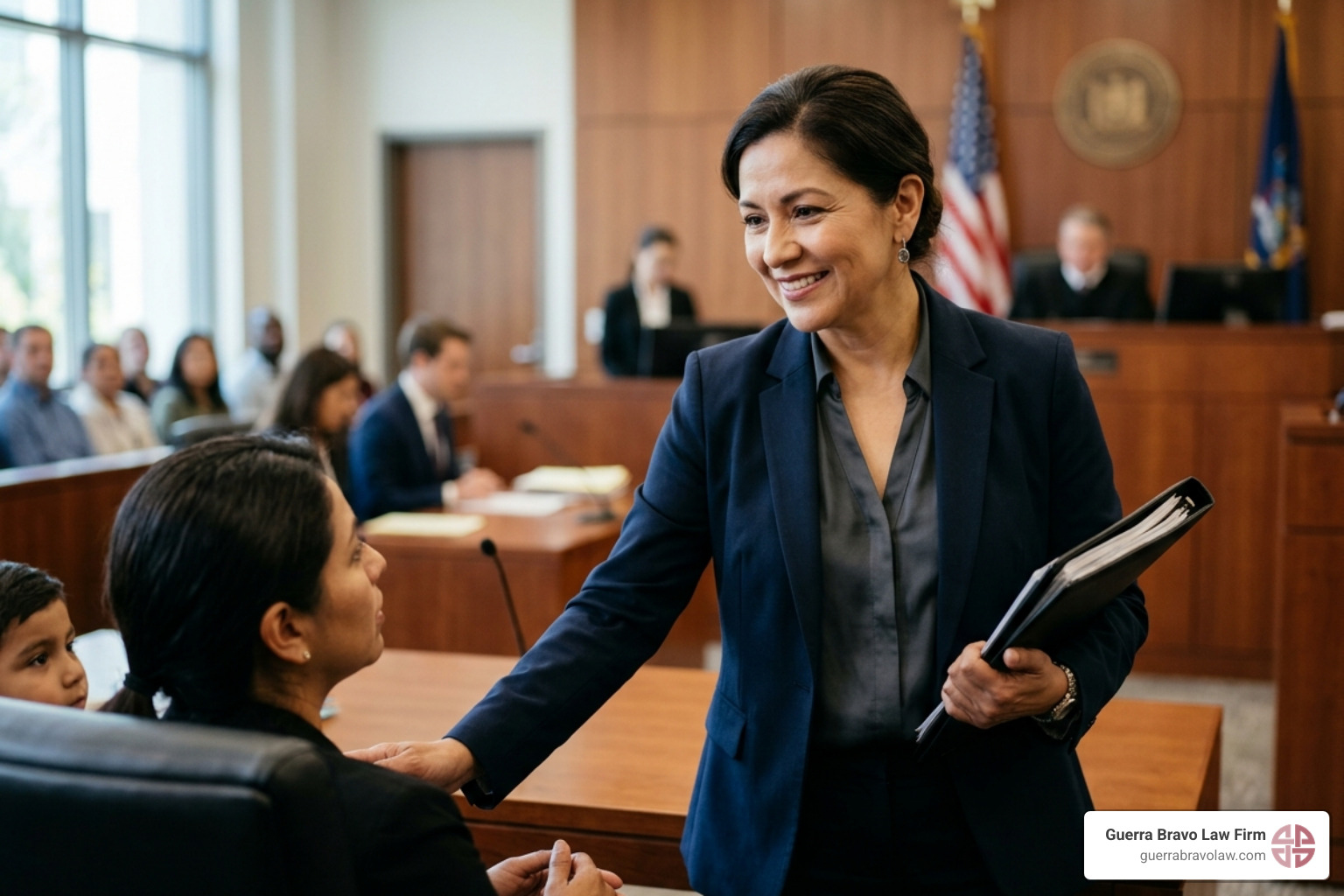
Navigating the Storm with a Removal Defense Expert
When Deportation Feels Like a Dead End — Here's What You Need to Know
A deportation defense attorney is a licensed immigration lawyer who represents non-citizens facing removal from the United States in immigration court — fighting to protect your right to stay.
What a deportation defense attorney can do for you:
Review your Notice to Appear (NTA) and identify legal errors
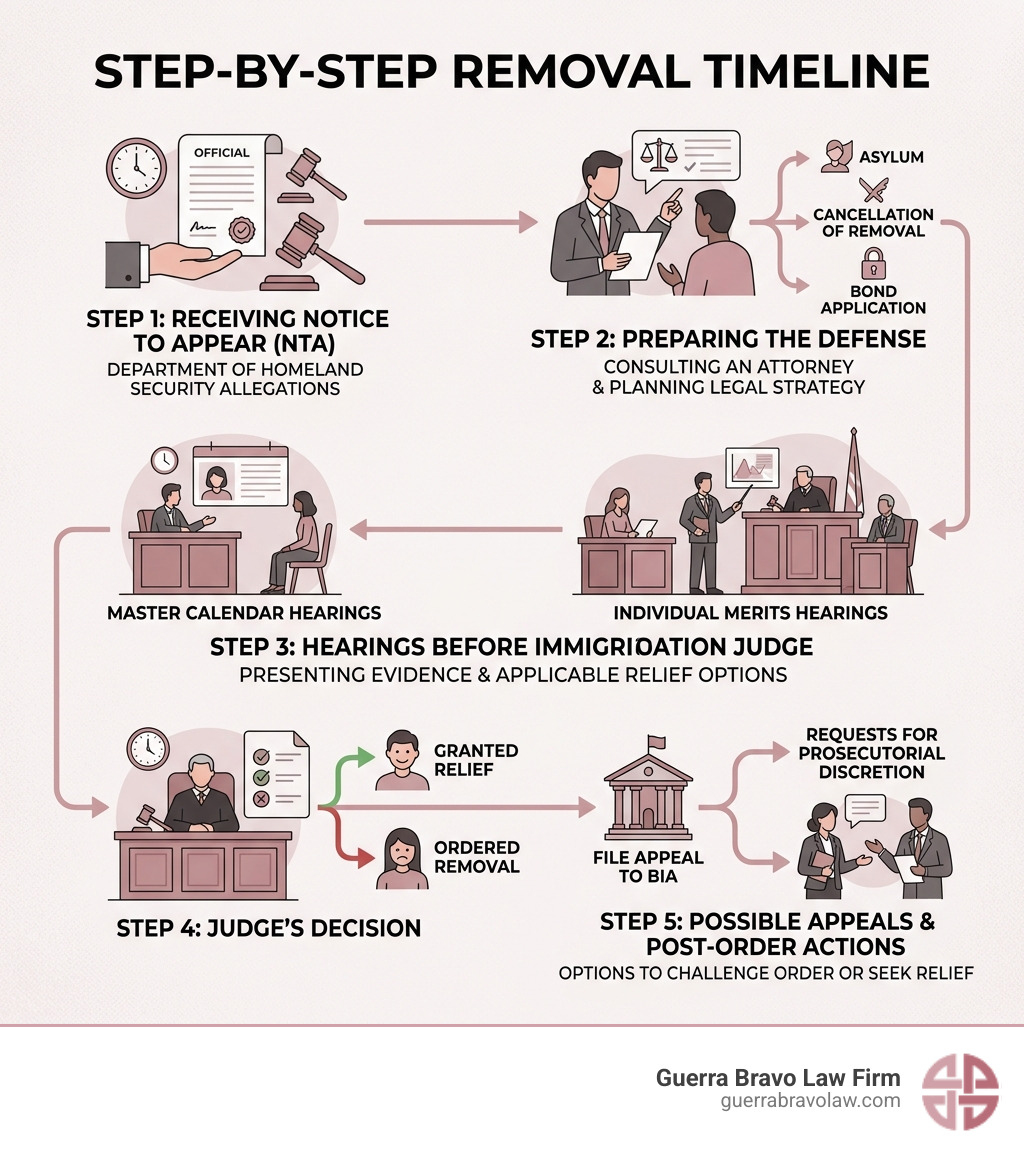
Represent you at Master Calendar and Merits Hearings before an immigration judge
Apply for relief options like asylum, cancellation of removal, VAWA, U visas, or T visas
Request bond hearings to get you released from ICE detention
File appeals to the Board of Immigration Appeals (BIA) or Federal Court
Pursue prosecutorial discretion to pause or close your case
Facing a removal order is one of the most frightening experiences a person or family can go through. The stakes are real — separation from your children, your home, your community, everything you've built.
Here's the hard truth: the U.S. government is not required to provide you a free attorney in removal proceedings. That means you are up against a trained government prosecutor — alone — unless you hire your own legal representation.
The good news? Deportation is not always final. With the right legal strategy and an experienced attorney in your corner, it may be possible to appeal, delay, or stop your removal entirely.
This guide walks you through every stage of the removal defense process — from the moment you receive a Notice to Appear to the options available after a final order is issued. Whether you are detained, have a criminal record, or have already received a removal order, there are often more options than you think.
Understanding the Removal Process and the Role of a Deportation Defense Attorney
The removal process can feel like being caught in a complex maze where the walls are constantly moving. In the United States, immigration law is subject to rapid changes through congressional amendments, Department of Homeland Security (DHS) actions, and court decisions. Because of this volatility, having a guide who knows the terrain is not just helpful—it is essential.

When we talk about "removal defense," we are referring to the legal strategies used to prevent the government from forcedly expelling a non-citizen. This process officially begins when you receive a Notice to Appear (NTA). This document is the government's way of saying they believe you should be removed and lists the factual allegations against you.
At Guerra Bravo Law Firm, we believe no one should face this storm alone. Understanding removal defense starts with knowing that while the process looks like a criminal trial, it is technically a civil administrative proceeding. This distinction is why the government doesn't provide a "public defender" for immigration cases. If you want a voice in court, you must bring your own.
For those navigating this in South Texas, understanding removal defense in Texas immigration courts is particularly important due to the high volume of cases in regions like the Rio Grande Valley.
The Critical Stages of Immigration Court
Immigration court is overseen by the Executive Office for Immigration Review (EOIR), which is part of the Department of Justice. Here are the key players and stages you need to know:
The Immigration Judge: Unlike a criminal judge who might focus on sentencing, an immigration judge decides if you have a legal right to remain in the U.S. based on the evidence presented.
The DHS Trial Attorney: This is the government's prosecutor. Their job is to represent the interests of the Department of Homeland Security and argue for your removal.
The Master Calendar Hearing: Think of this as a preliminary "check-in." It’s usually short. The judge will ask if you admit or deny the charges in the NTA and what kind of relief (like asylum or a green card) you are seeking.
The Individual (Merits) Hearing: This is your actual trial. This is where your removal defense lawyer presents your full case.
Why You Need a Deportation Defense Attorney for Your Merits Hearing
The Merits Hearing is your "one shot" to convince the judge you deserve to stay. It is a high-pressure environment where strict rules of evidence apply. A deportation defense attorney is critical here because they handle the heavy lifting:
Evidence Gathering: We help you collect birth certificates, medical records, police reports from your home country, and letters of support that prove your "good moral character."
Witness Preparation: If family members or experts are testifying, they need to know how to answer tough questions from the government prosecutor.
Cross-Examination: We challenge the government's evidence. If the DHS attorney tries to use a flawed record against you, we are there to object.
Legal Arguments: Many people ask, "Can a lawyer stop deportation?" The answer is often yes, by identifying specific legal "reliefs" that you qualify for but might not know exist.
Common Grounds for Removal and Types of Deportation Orders
Why does the government start removal proceedings in the first place? There are many reasons, ranging from simple paperwork errors to serious legal issues. Common grounds include visa overstays, entering the U.S. without inspection (unlawful entry), or green card deportation due to certain criminal convictions.
Even lawful permanent residents aren't immune. If a green card holder is accused of marriage fraud or certain crimes, they can find themselves in deportation and removal proceedings just like anyone else.
Distinguishing Between Departure, Exclusion, and Deportation Orders
Not all "removal orders" are created equal. Depending on your history and how you entered the country, you might face different types of orders:
Departure Order: Often associated with "Voluntary Departure," this allows a person to leave on their own terms within a specific timeframe. It’s often better than a forced removal because it may make it easier to return legally later.
Exclusion Order: Historically used for people stopped at a port of entry who were found "inadmissible."
Deportation Order: A formal order from a judge requiring your removal from the country.
If you have an old order on your record, we may be able to file a motion to cancel deportation order or reopen the case if new evidence has come to light.
Consequences of a Final Order of Removal
A final order isn't just about leaving; it’s about how long you are barred from coming back. These re-entry bans are significant:
Five-Year Ban: Typically for those removed upon arrival at a port of entry.
Ten-Year Ban: The standard ban for someone ordered removed by an immigration judge after being in the U.S.
Permanent Inadmissibility: This can happen if someone returns to the U.S. illegally after a prior removal or after accruing significant "unlawful presence."
For our neighbors in the Rio Grande Valley who deal with cross-border issues involving Canada or other nations, specialized documents like an Authorization to Return to Canada (ARC) or specific U.S. waivers are often required to overcome these bans.
Legal Defenses and Relief Options: Fighting Your Case in Court
Just because the government says you should leave doesn't mean the judge will agree. There are several powerful legal "shields" we use to protect our clients.
Strategic Relief: How a Deportation Defense Attorney Utilizes Waivers
One of the most common ways to stop removal is through a cancellation removal complete guide strategy. This is a process where we ask the judge to "cancel" the deportation because of your long-term ties to the U.S. and the "exceptional and extremely unusual hardship" your removal would cause to your U.S. citizen or green card holder relatives.
Other specialized protections include:
Asylum: For those who fear persecution in their home country based on race, religion, nationality, political opinion, or membership in a particular social group.
VAWA: For survivors of domestic abuse at the hands of a U.S. citizen or permanent resident spouse or parent.
U Visas: For victims of certain crimes who have been helpful to law enforcement.
T Visas: For victims of human trafficking.
In many cases, we must file a deportation waiver application to "forgive" a prior mistake, such as a fraud charge or a specific criminal conviction. For our Spanish-speaking clients, we provide a deep dive into cancelacion de deportacion to ensure they understand their rights in their native language.
Humanitarian and Compassionate Grounds
Sometimes, the law doesn't have a perfect "box" for your situation, but it would be inhumane to remove you. This is where Humanitarian and Compassionate (H&C) considerations come in. While more common in Canadian law, the U.S. equivalent often involves Prosecutorial Discretion.
We can advocate for the DHS to simply "close" your case because you are a low priority — perhaps you have been here for 20 years, have no criminal record, and have children who depend on you. Learning how to stop removal proceedings through these discretionary measures can save a family from years of litigation.
Navigating Detention, Bond Hearings, and Criminal Inadmissibility
One of the most stressful parts of immigration law is when a loved one is taken into ICE custody. When Enforcement and Removal Operations (ERO) detains someone, the clock starts ticking.
Immediate Actions When Detained by ICE
If you or a loved one is detained, remember these four things:
Right to Remain Silent: You do not have to answer questions about where you were born or how you entered the U.S. without a lawyer.
Right to an Attorney: Ask for one immediately.
Find the A-Number: This 9-digit "Alien Number" is on all immigration documents and is essential for us to find you in the system.
Don't Sign Anything: Do not sign a "voluntary removal" form without talking to us first. Many people accidentally sign away their right to a hearing.
We specialize in ICE ERO Detention cases and fighting for ICE Detention Release through bond hearings. A bond allows you to go home and fight your case from the outside, which significantly increases your chances of success.
Impact of Criminal Convictions and Post-Conviction Relief
Criminal issues can make a deportation case much harder. Certain "aggravated felonies" or "crimes involving moral turpitude" (CIMT) can trigger mandatory detention and make you ineligible for many types of relief.
However, we can often pursue Post-Conviction Relief. This might involve working with criminal defense attorneys to file motions to vacate a conviction if you weren't properly advised of the immigration consequences when you entered a plea. This is a highly technical area where having a deportation defense attorney with insider knowledge of how the government views these crimes is a massive advantage.
For a full roadmap, check out our stop removal proceedings complete guide or reach out for immediate help with deportation.
Frequently Asked Questions about Deportation Defense
What should I do immediately if I receive a Notice to Appear (NTA)?
First, take a deep breath. Do not ignore it. Check the bottom of the form for a hearing date and location. You should immediately verify this date using the EOIR automated phone system or website, as dates often change. Then, contact a specialized deportation defense attorney. We need to review the "factual allegations" on the NTA to see if the government has made mistakes that could get your case dismissed.
Can I be released from immigration detention while my case is pending?
In many cases, yes. Unless you fall under "mandatory detention" (usually due to specific criminal records), you are eligible for a bond hearing. During this hearing, we present evidence to the judge that you are not a "flight risk" and not a "danger to the community." Showing that you have a family to return to and a job waiting for you is key to securing a bond.
How much does it cost to hire a deportation defense attorney?
The cost varies based on how complex your case is. A case for someone who is detained usually costs more because of the urgency and travel to detention centers. Most firms, including ours, offer initial consultations to evaluate your case. We provide a transparent fee structure so you know exactly what to expect for your Master Calendar and Merits hearings.
Conclusion: Your Defense Starts with Experience
The immigration system is designed to be difficult, but it is not impossible to navigate. When you are facing the possibility of removal, the most important tool you have is information—and the second most important is a battle-tested advocate.
At Guerra Bravo Law Firm, we don't just read the law; we know how the other side thinks. Attorney Iris Guerra Bravo brings over 14 years of insider experience working with ICE and DHS. This "behind-the-scenes" knowledge allows us to anticipate the government's moves and build individualized legal strategies that other firms might miss.
Whether you are in McAllen, Brownsville, Edinburg, or anywhere across the Rio Grande Valley, we are here to help you protect the life you've built. If you’re searching for a deportation defense attorney near me, look for a team that understands the local courts in Pharr, Weslaco, and Harlingen.
Don't wait for the storm to get worse. Contact us today to discuss your removal defense and let’s start fighting for your future together.
═══
Guerra Bravo Law Firm Serving McAllen, Brownsville, and the entire Rio Grande Valley. Innovative Strategies. Insider Experience. Individualized Care.