

February 8, 2026
Beyond the Basics: Decoding Challenging Immigration Scenarios
Beyond the Basics: Decoding Challenging Immigration Scenarios
Why Difficult Immigration Cases Require Expert Legal Navigation
Difficult immigration cases are those that go beyond standard visa applications or renewals. They involve complex legal challenges that can determine whether you can enter, remain in, or be removed from a country.
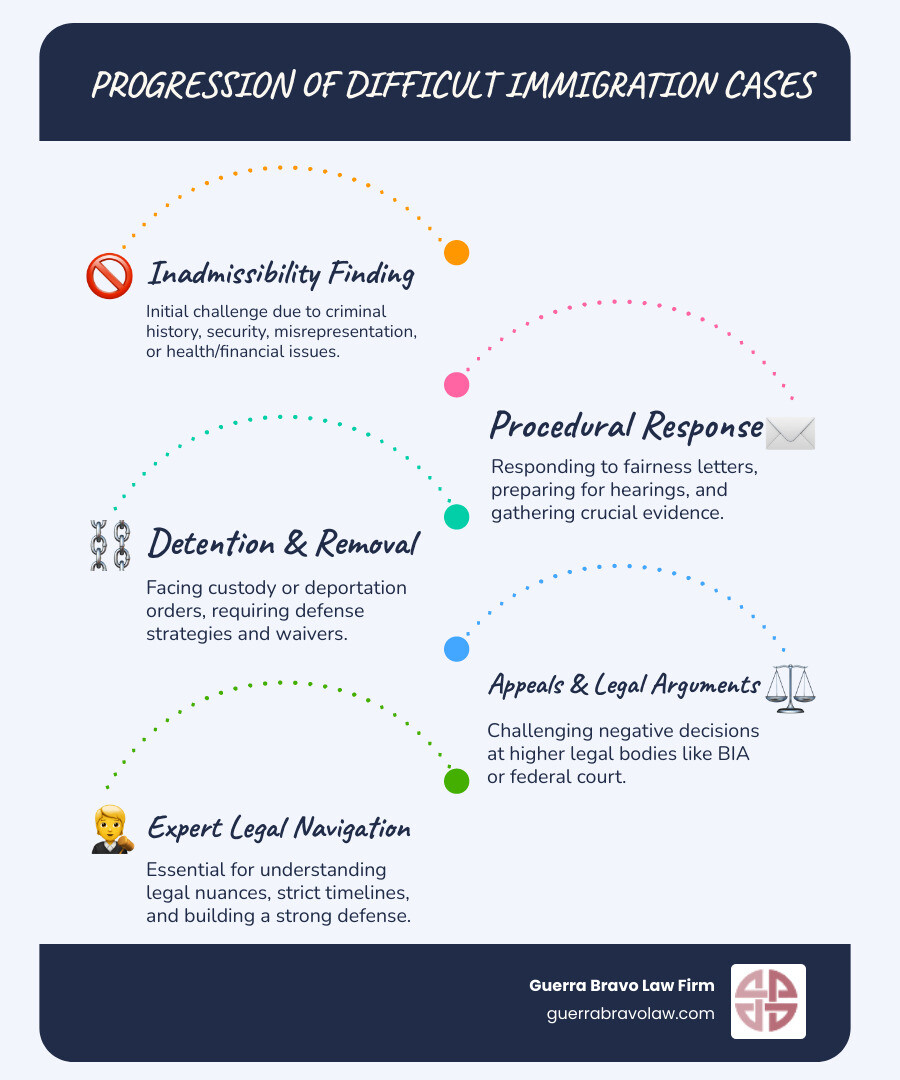
What makes an immigration case difficult:
-
Inadmissibility findings - Criminal history, security concerns, misrepresentation, or health/financial issues
-
Procedural complexity - Responding to fairness letters, preparing for hearings, meeting strict deadlines
-
Detention and removal - Being held in custody or facing deportation orders
-
Appeals and legal arguments - Challenging negative decisions at higher legal bodies
-
Family implications - An inadmissible family member affecting your own status
These cases carry enormous consequences. A Canadian immigration officer makes admissibility decisions when you apply for a visa, request an Electronic Travel Authorization (eTA), or arrive at a port of entry. If found inadmissible, you will be denied entry, refused a visa, or removed from the country.
The legal landscape is unforgiving. As one immigration law expert notes, “At some point along your immigration journey, you may find yourself having to respond to an allegation that you are inadmissible.” When this happens, the procedural rules are strict, the timelines are tight, and the margin for error is virtually zero.
The stakes are deeply personal. These cases affect families, careers, and futures. An individual facing deportation after a DUI conviction isn’t just dealing with a legal technicality—they’re fighting to stay with their spouse and children. A business owner flagged for misrepresentation isn’t simply facing paperwork issues—they’re watching their livelihood hang in the balance.
This guide will walk you through the most challenging immigration scenarios you might face, from understanding inadmissibility grounds to navigating detention, appeals, and advanced legal strategies. You’ll learn what immigration authorities look for, what your rights are, and why expert legal representation is essential.
Understanding Inadmissibility: The First Hurdle in Difficult Immigration Cases
Inadmissibility is a legal term meaning a person is not allowed to enter or remain in a country. An officer can find you inadmissible when you apply for a visa or when you arrive at a port of entry. This is one of the most common reasons an immigration journey becomes challenging, potentially leading to visa denials, refusal of entry, or even removal.
Criminality and Security Grounds
A significant portion of difficult immigration cases stem from security or criminal concerns. These are taken very seriously by immigration authorities, and a finding of criminality or security risk can lead to severe consequences, including deportation.
Our legal system views certain actions as a threat to public safety and national security. In the United States, particularly in areas like McAllen and the Rio Grande Valley, these grounds for inadmissibility are rigorously enforced.
Consider the following categories:
-
Criminal Convictions: Committing a crime, whether in the U.S. or abroad, can make an individual inadmissible or deportable. This includes:
-
Serious Criminality: Offenses like aggravated felonies, crimes involving moral turpitude, or drug trafficking can trigger automatic removal proceedings.
-
Driving Under the Influence (DUI): Even offenses like driving while under the influence of drugs or alcohol can lead to inadmissibility and deportation. This is a common and often underestimated ground for removal, particularly for individuals who may have obtained a Green Card but are then found deportable due to a prior conviction. We often see individuals in the Rio Grande Valley facing this exact challenge. To learn more about how criminal convictions impact immigration status, explore our guide on What Crimes Are Eligible for Deportation for an Immigrant.
-
-
Organized Crime Involvement: Membership in, or association with, organizations involved in organized criminal activity, people smuggling, or money laundering is a serious ground for inadmissibility. This is especially pertinent in border regions, where such activities are unfortunately prevalent.
-
Security-Related Reasons: These grounds are among the most severe and can include:
-
Espionage or Subversion: Engaging in acts of espionage against the U.S. or attempting to overthrow the government.
-
Violence or Terrorism: Involvement in acts of violence or terrorism, or membership in an organization engaged in such activities.
-
Being a Danger to the Country’s Security: Any activity deemed a threat to the safety and security of the United States.
-
These types of allegations are often handled by federal agencies and require a robust defense strategy.
-
Human Rights, Medical, and Financial Reasons
Inadmissibility isn’t limited to criminal acts. A person’s past associations, health, or financial situation can also create significant barriers to entering or remaining in the U.S.
-
Human or International Rights Violations: Individuals involved in severe human rights abuses are typically inadmissible. This includes:
-
War Crimes or Crimes Against Humanity: Participation in acts of genocide, war crimes, or crimes against humanity.
-
Senior Officials in Violating Governments: Being a senior official in a government that has engaged in gross violations of human rights or is subject to international sanctions.
-
-
Medical Inadmissibility: Health conditions can also lead to inadmissibility if they:
-
Pose a Public Health Risk: Conditions that could endanger the public health of the U.S. population.
-
Create Excessive Demand on Health Services: Conditions that would likely cause an excessive demand on health or social services. This is assessed carefully to balance individual needs with public resources.
-
-
Financial Inadmissibility: The U.S. government requires immigrants to demonstrate they will not become a public charge. Therefore, financial reasons can lead to inadmissibility if an individual is unable or unwilling to support themselves and their family members. This often involves showing adequate financial resources or having an eligible sponsor.

Misrepresentation and Family-Related Inadmissibility
Honesty and the status of your family members are critical. Even unintentional errors or a relative’s issues can complicate your own case, turning it into a difficult immigration case.
-
Misrepresentation: This is a serious ground for inadmissibility and involves:
-
Providing False Information: Submitting false documents or making untrue statements during any part of the immigration process.
-
Withholding Crucial Information: Failing to disclose material facts that are relevant to a decision under immigration law.
-
Consequences of Misrepresentation: A finding of misrepresentation can result in a permanent bar from the U.S., making it incredibly difficult to obtain any future immigration benefits. It’s why attention to detail and absolute honesty are paramount in all applications.
-
-
Having an Inadmissible Family Member: This can be a particularly heartbreaking and complex situation. If a principal applicant’s spouse, child, or even parent is found inadmissible, it can, in certain circumstances, affect the principal applicant’s own admissibility. This highlights the interconnectedness of family immigration cases and why a comprehensive legal strategy is essential when dealing with family petitions in McAllen and beyond. For more on this, especially concerning Green Cards, read our article on Green Card Deportation.
The Procedural Gauntlet: Navigating Allegations and Hearings
When immigration authorities flag an issue, it triggers a formal process that requires a strategic and timely response. Understanding this procedural gauntlet is key to protecting your rights and building a strong case.
Responding to a Notice of Intent to Deny (NOID) or Request for Evidence (RFE)
In the U.S. immigration system, if an officer finds an issue with your application or believes you may be inadmissible, they will often issue a Notice of Intent to Deny (NOID) or a Request for Evidence (RFE). These are your opportunities to clarify, correct, or provide additional information before a final decision is made. How you handle this is critical.
-
Role of the NOID/RFE: These letters serve as an official communication from the government, informing you of an allegation or deficiency in your case and providing an opportunity to respond with evidence and arguments.
-
Key Response Strategies:
-
Thorough Review: Carefully read the letter to understand the precise allegations or requested information.
-
Gathering and Presenting Strong Evidence: Collect all relevant documents, affidavits, and supporting materials to directly address each point raised. This might include police records, medical evaluations, financial statements, or character references.
-
Crafting Persuasive Legal Arguments: Your response is not just about facts; it’s about presenting those facts within the framework of immigration law. A well-reasoned legal argument can explain why the allegations are unfounded or why discretion should be exercised in your favor.
-
-
The Vital Importance of Legal Representation: This stage is not the time for guesswork. An experienced immigration lawyer can help you:
-
Understand the legal implications of the NOID/RFE.
-
Identify and gather the most compelling evidence.
-
Draft a comprehensive and legally sound response.
-
Ensure the response is submitted on time, preventing an automatic denial.
-
-
If your visa has been denied, or you’re facing other negative decisions, understanding the appeal process is crucial. Our team can assist with a Visa Denial Appeal.
When Your Case Goes to an Immigration Hearing
If the issues are not resolved through written responses, or if the initial finding of inadmissibility leads directly to removal proceedings, your case may be referred for a formal hearing before an Immigration Judge. This is a quasi-judicial proceeding where a decision-maker will rule on your case.
-
The Referral Process: Cases can be referred to an Immigration Judge for various reasons, including:
-
An initial finding of inadmissibility at a port of entry.
-
An arrest by Immigration and Customs Enforcement (ICE) in the Rio Grande Valley.
-
A denial of an application that triggers removal proceedings.
-
-
Preparing for a Hearing: This involves extensive preparation, including:
-
Document Review: Organizing and analyzing all evidence.
-
Witness Preparation: If witnesses are needed, preparing them for testimony.
-
Legal Research: Identifying relevant laws, regulations, and precedents to support your case.
-
Client Preparation: Ensuring you understand the process, what to expect, and how to present your testimony clearly and credibly.
-
-
The Role of the Immigration Judge: The Immigration Judge presides over the hearing, listens to testimony, reviews evidence, and applies immigration law to the facts presented. Their role is to make a fair and impartial decision regarding your admissibility or removability.
-
Adjudication of Inadmissibility: The judge will determine if the grounds for inadmissibility or removability are proven and, if so, whether any forms of relief from removal are available to you.
-
Principles of Natural Justice and Procedural Fairness: In these hearings, fundamental rights to fair treatment apply. This means you have the right to:
-
Understand the allegations against you.
-
Present your side of the story and evidence.
-
Cross-examine opposing witnesses.
-
Be free from bias in the decision-making process.
-
-
Navigating these complex court proceedings, especially in the busy immigration courts of South Texas, requires specialized knowledge. We provide comprehensive insights into Understanding Removal Defense in Texas Immigration Courts.

Immigration Detention and Removal: The Highest Stakes
For the most severe and difficult immigration cases, the consequences can include being detained or ordered removed from the country. This is the most critical stage where expert legal defense is non-negotiable.
Understanding Immigration Detention
Immigration authorities, particularly ICE, can detain individuals for several reasons, stripping them of their freedom while their case is pending. We often see clients in McAllen, Brownsville, and other parts of the Rio Grande Valley facing detention, which can be a traumatic experience.
-
Grounds for Detention: Common reasons for detention include:
-
Posing a Danger to the Public: If an individual is deemed a threat to the safety of the community.
-
Being a Flight Risk: If there is a belief that an individual might not appear for future court dates or hearings.
-
Security Threat Concerns: Allegations related to national security.
-
Inability to Confirm Identity: If immigration authorities cannot verify an individual’s identity or nationality.
-
-
Rights of Detained Individuals: Even while detained, individuals have fundamental rights, including:
-
The right to legal counsel.
-
The right to be informed of the reasons for their detention.
-
The right to communicate with family members.
-
-
The Detention Review Process: Detained individuals are typically entitled to periodic detention reviews, where an Immigration Judge assesses whether continued detention is warranted. These reviews are crucial opportunities to argue for release.
-
Advocating for Release: Our firm works diligently to advocate for the release of detained individuals. This can involve:
-
Presenting evidence that the individual is not a flight risk or a danger.
-
Requesting bond hearings.
-
Exploring alternatives to detention.
-
For guidance on this challenging process, please refer to our information on ICE Detention Release.
-
The Fight Against Deportation
A removal or deportation order is not always the end of the road. There are legal avenues to fight back and protect your future in the country, especially in areas like the Rio Grande Valley where deportation proceedings are frequent.
-
Deportation Defense Strategies: Our strategies are custom to the specifics of each case and can include:
-
Challenging the Grounds for Removal: Arguing that the government has not met its burden of proof for the alleged grounds of removability.
-
Seeking Forms of Relief: Applying for various forms of relief from removal, such as asylum, cancellation of removal, or adjustment of status.
-
-
Cancellation of Removal: This is a form of discretionary relief available to certain long-term residents who meet specific criteria, demonstrating good moral character and that their removal would cause exceptional and extremely unusual hardship to qualifying family members.
-
Applying for Deportation Waivers: Depending on the grounds of inadmissibility or deportability, waivers may be available to overcome certain issues. These are often complex applications requiring strong supporting evidence.
-
The Critical Role of a Lawyer in Stopping Deportation: Statistics show that immigrants with legal representation are significantly more likely to succeed in their cases. As the American Immigration Council highlights, Access to lawyers is critical for immigrants facing deportation. An attorney can:
-
Identify all possible defenses and forms of relief.
-
Gather and present compelling evidence.
-
Represent you skillfully in court.
-
Steer the intricate legal procedures.
-
-
For a comprehensive overview of how a lawyer can intervene, see our guide: Can a Lawyer Stop Deportation.
Appeals and Advanced Strategies for Difficult Immigration Cases
A negative decision from an immigration officer or judge doesn’t have to be the final word. The legal system provides avenues for appeal and judicial review, which are essential tools in complex cases.
Challenging a Negative Decision: The Appeals Process
The appeals process allows for a higher legal body to review a decision for errors of law or fact. This is a critical stage for many difficult immigration cases.
-
Filing an Appeal: If an Immigration Judge issues an unfavorable decision, you generally have the right to appeal to the Board of Immigration Appeals (BIA).
-
The Board of Immigration Appeals (BIA): The BIA is the highest administrative body for interpreting and applying immigration laws. It reviews decisions made by Immigration Judges. The BIA typically does not conduct new hearings; instead, it reviews the written record of the proceedings and the legal briefs submitted by both parties.
-
Federal Court Challenges: If the BIA’s decision is still unfavorable, further appeals can be made to the federal circuit courts of appeals and, in rare instances, to the U.S. Supreme Court. Cases like Santos-Zacaria v. Garland illustrate how the Supreme Court clarifies procedural aspects, such as the exhaustion of administrative remedies, impacting how noncitizens challenge removal orders.
-
Submitting Legal Briefs: Appeals are primarily decided on the strength of written legal briefs. These documents carefully outline legal errors, misinterpretations of fact, or abuses of discretion by the lower court.
-
Strict Deadlines: Appeals have very strict deadlines. For example, appeals to the BIA usually must be filed within 30 days of the Immigration Judge’s decision. Missing these deadlines can result in the permanent loss of your right to appeal.
-
For a full understanding of the process, consult our Deportation Defense Lawyer Complete Guide.
Precedent and Nuanced Arguments in Difficult Immigration Cases
Success in complex cases often hinges on sophisticated legal arguments and a deep understanding of legal precedent. Our firm leverages this expertise to steer the most challenging scenarios.
-
Using Jurisprudential Guides and Persuasive Decisions: While the U.S. system doesn’t use the exact “Jurisprudential Guides” as Canada’s IRB, our BIA and federal courts issue precedent decisions that guide future cases. Understanding and applying these precedents is vital. We analyze these rulings to identify patterns and arguments that can strengthen your case.
-
Arguing Complex Legal Concepts: Immigration law is filled with intricate concepts that require specialized knowledge.
-
The “Persecutor Bar” and the Lack of a Duress Exception: A prime example of a complex legal concept is the “persecutor bar,” which can make individuals ineligible for asylum if they participated in persecution. The U.S. Attorney General has clarified, as in Matter of Negusie, that this bar is absolute and does not contain a duress exception. This means that even if someone was forced to participate in persecution, they may still be barred from asylum. This ruling significantly impacts asylum claims for individuals from conflict zones. We dig into this in detail in our analysis of Matter of Negusie, Interim Decision #4135.
-
Exclusion from Asylum: Beyond the persecutor bar, other grounds can exclude individuals from asylum protection, such as those who committed serious non-political crimes or are a danger to U.S. security.
-
-
Challenging Convictions in Immigration Court: As seen in Matter of Garcia-Flores, Immigration Judges cannot go beyond a jury’s verdict to find an individual “factually innocent” of a crime. A criminal conviction, particularly for a serious offense, is a significant negative factor in discretionary relief cases like cancellation of removal. This means that even if you believe you were wrongly convicted, for immigration purposes, the conviction stands unless it’s overturned by a criminal court. This ruling underscores the importance of a strong defense from the outset and the limited role of immigration courts in re-litigating criminal guilt.
Frequently Asked Questions about Challenging Immigration Scenarios
What makes an immigration case ‘difficult’?
A case typically becomes “difficult” when it involves complex legal issues beyond a standard application. This includes allegations of inadmissibility (due to criminal records, misrepresentation, security concerns), facing immigration detention, or needing to appeal a negative decision. The high stakes and intricate legal procedures require specialized knowledge to steer successfully.
Can I handle a difficult immigration case without a lawyer?
While technically possible, it is extremely risky. The law is complex, procedures are strict, and the consequences of a mistake are severe, including deportation and permanent bars from the country. An Experienced Immigration Lawyer understands the legal nuances, procedural rules, and strategies needed to build the strongest possible case.
What is the first step if I receive a procedural fairness letter or notice of a hearing?
Do not ignore it. The most critical first step is to read the document carefully to understand the allegations and, most importantly, the deadline for your response. Immediately begin gathering all relevant documents and contact an experienced immigration lawyer. Time is of the essence, and a swift, strategic response is crucial.
Conclusion: Finding a Path Forward in Your Immigration Journey
Facing a challenging immigration scenario is daunting, whether it involves an inadmissibility finding, the threat of detention, or a complex appeal. These situations are defined by their legal complexity and the high stakes involved. However, it is crucial to remember that a difficult immigration case is not a hopeless one. With a strategic approach, a thorough understanding of the law, and powerful legal advocacy, there are often pathways to a positive resolution.
The key is to secure representation from a legal team with proven experience in the toughest immigration battles. The insider knowledge of how government agencies like ICE and DHS build their cases, like that offered by Guerra Bravo Law Firm, can be the decisive factor in your defense. Our attorney, Iris Guerra Bravo, brings over 14 years of insider experience with ICE and DHS, offering battle-tested, individualized legal strategies for complex cases right here in McAllen, Texas, and throughout the Rio Grande Valley. If you are facing a complex immigration issue, don’t wait. Take the first step toward protecting your future.
Explore our comprehensive Immigration Services to see how we can help.
[