

February 24, 2026
Parole Power: Understanding This Critical Immigration Pathway
Parole Power: Understanding This Critical Immigration Pathway
Understanding Humanitarian Parole: A Critical Lifeline in Urgent Situations
A humanitarian parole lawyer helps individuals who face urgent humanitarian crises and need temporary entry into the United States when no standard visa is available. This specialized area of immigration law requires deep knowledge of USCIS procedures, strict documentation requirements, and the discretionary nature of parole decisions.
What You Need to Know About Humanitarian Parole:
-
Purpose: Temporary U.S. entry for urgent humanitarian reasons or significant public benefit
-
Nature: Discretionary decision by USCIS, not an automatic right
-
Duration: Typically granted for up to one year, with possible extensions
-
Status: Does not lead to permanent residency or green card
-
Success Rate: Approximately 3 out of 4 applications are denied
-
Key Requirements: Compelling humanitarian need, financial support, extensive documentation
-
Common Uses: Medical emergencies, visiting critically ill relatives, attending funerals, organ donation, escaping imminent harm
When families face medical emergencies, seek protection from targeted harm, or need to attend the funeral of a loved one in the United States, humanitarian parole may be the solution.
The reality is stark: humanitarian parole is considered a last resort option. USCIS grants it sparingly, and the process has become increasingly complex since Fall 2021, when the agency reported extremely high numbers of parole requests leading to significant processing delays.
This is not a lightweight visitor visa. Parole requires demonstrating urgent needs that cannot wait for normal visa processing. It’s a temporary lifeline for individuals who are otherwise inadmissible to the U.S. but face compelling circumstances that justify temporary entry.
The stakes are high. Without proper legal guidance, applicants risk denial, which could put their health, safety, or welfare at grave risk. Understanding the complex rules, gathering the right evidence, and presenting a compelling case to USCIS often requires expertise in navigating federal immigration law and agency discretion.
What is Humanitarian Parole and Who Qualifies?
At its core, humanitarian parole is a unique tool within U.S. immigration law. It allows certain foreign nationals, who would otherwise be considered inadmissible to the United States, to temporarily enter the country. This authority stems from Section 212(d)(5)(A) of the Immigration and Nationality Act (INA), codified at 8 U.S.C. § 1182(d)(5)(A).
Parole is a discretionary grant by USCIS, not an entitlement. It’s a temporary measure and, importantly, it does not lead directly to permanent legal status or a green card. The primary reasons for granting parole fall into two main categories: “urgent humanitarian reasons” or “significant public benefit.”
Common Reasons for Seeking Parole
When we talk about “urgent humanitarian reasons,” we’re referring to situations that demand immediate attention and compassion. These are often deeply personal and time-sensitive circumstances where a person’s presence in the U.S. is vital.
Here are some of the most common reasons we see individuals seeking humanitarian parole:
-
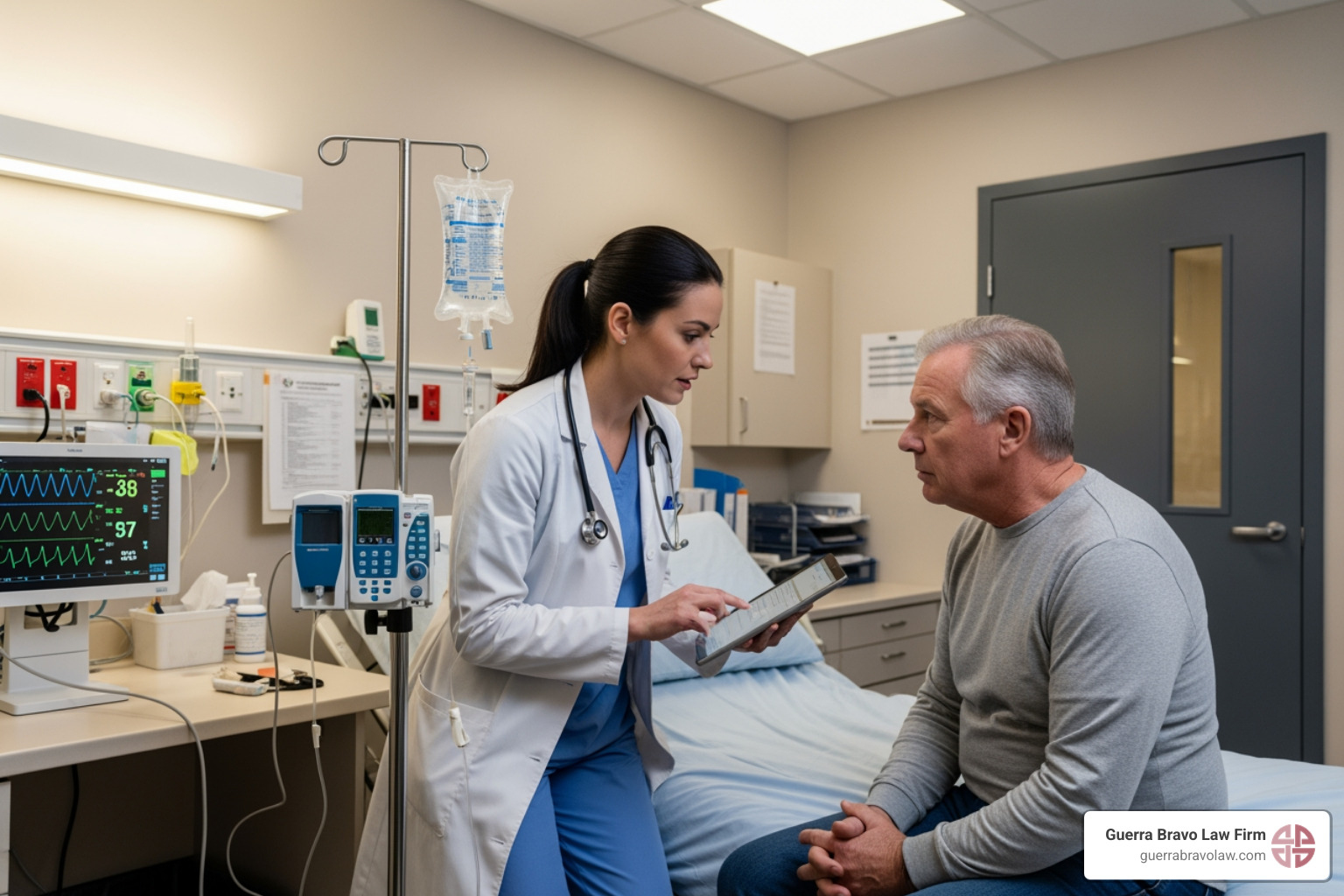
Medical Emergencies: This is a frequent and compelling reason. It applies when someone needs critical medical treatment in the U.S. that is simply unavailable in their home country. This could involve life-saving surgeries, specialized therapies, or participation in experimental treatments that offer the only hope.
-
Organ Donation: For those needing to travel to the U.S. to either be an organ donor for a U.S. resident or to receive an organ from a U.S. donor, parole can provide the necessary temporary entry.
-
Attending a Family Funeral: The sudden loss of a close family member in the U.S. can be devastating. Humanitarian parole may allow individuals to enter the country to attend the funeral and grieve with their loved ones.
-
Visiting a Critically Ill Relative: When a close family member in the U.S. is at an end-of-life stage, humanitarian parole can allow relatives to visit, provide comfort, and say their goodbyes. This is often a highly emotional and time-sensitive request.
-
Witness in Legal Proceedings: Sometimes, an individual’s presence is crucial for a U.S. court proceeding, either as a witness or a party. If they are otherwise inadmissible, parole can facilitate their temporary entry to fulfill this civic duty.
-
Escaping Imminent Harm: In situations where individuals face immediate and severe threats to their safety, such as targeted harm, violence, or civil unrest in their home country, humanitarian parole can offer a temporary refuge.
Eligibility and Inadmissibility
The core principle behind humanitarian parole is that it’s for “otherwise inadmissible individuals.” This means people who, for various reasons, cannot obtain a regular visa to enter the U.S. or are currently ineligible for admission under standard immigration laws. This could be due to prior immigration violations, certain criminal convictions, or simply the lack of an available visa category that fits their urgent need.
The key to qualifying is demonstrating that there are truly “no other visa options available” and that your situation presents “compelling reasons” that warrant this extraordinary measure. USCIS specifically states that parole cannot be used to circumvent normal visa processing or to gain permanent status. It is granted sparingly and only after careful consideration of all factors.
Factors that might lead to denial include not adequately proving the urgency of the humanitarian situation, failing to show a clear benefit to the public, or if USCIS suspects the applicant is attempting to bypass standard immigration procedures. Understanding grounds for inadmissibility is crucial, and our firm helps clients in McAllen, Brownsville, and across the Rio Grande Valley steer these complex issues. We encourage you to learn more about US Immigration Law to better understand these concepts.
The Humanitarian Parole Application Process: A Step-by-Step Guide
The process of applying for humanitarian parole through USCIS is rigorous and requires meticulous attention to detail. “Extremely high numbers of parole requests since Fall 2021” have led to significant processing delays, making careful preparation more important than ever.

Required Forms and Documentation
The backbone of any humanitarian parole application is the submission of the correct forms and a comprehensive package of supporting evidence.
-
Form I-131, Application for Travel Document: This is the primary form used to request parole. Both the individual seeking parole (the beneficiary) or someone on their behalf (the petitioner) can file this form. You can find more information about Form I-131 on the USCIS website.
-
Form I-134, Declaration of Financial Support: This form is filed by the financial supporter, demonstrating their ability to financially support the beneficiary while they are in the U.S. This is a critical component, as USCIS wants assurance that the individual will not become a public charge.
-
Supporting Evidence: You must provide a detailed explanation of your need for parole, accompanied by robust documentation. This can include:
-
Medical records (on official letterhead with doctor’s signature, outlining diagnosis, prognosis, and required treatment)
-
Death certificates or funeral arrangements
-
Letters from family members, friends, or organizations detailing the urgency and necessity
-
Proof of relationship (birth certificates, marriage licenses)
-
Government-issued identification for both the petitioner and beneficiary
-
Evidence of attempts to obtain a visa and why it was unsuccessful
-
English translations with translator certifications for any foreign language documents
-
The Role of the Financial Supporter
A strong financial supporter is often the linchpin of a successful humanitarian parole application. USCIS considers whether the beneficiary will have adequate means of support while in the United States. “Lack of evidence of financial support” is a common reason for denial.
The financial supporter, who agrees to provide financial assistance, must file Form I-134, Declaration of Financial Support. The supporter’s income and assets will be assessed against the Health and Human Services Federal poverty guidelines. If the beneficiary has special needs (for example, medical costs), the supporter’s capacity to meet these needs is also evaluated.
It is possible to have multiple financial supporters, or even an organization as a supporter, if one individual cannot meet the requirements alone. In some cases, the beneficiary might be able to demonstrate they can support themselves, acting as a “self-financial supporter.”
Costs and Processing Times
Understanding the costs and likely processing times for humanitarian parole is vital for planning.
Costs:
-
Form I-131 Filing Fee: Currently, this fee is $630 for paper applications and $580 for online applications. A fee waiver (Form I-912) may be requested in certain circumstances.
-
New Immigration Parole Fee: There is a planned immigration parole fee of $1,000 to be paid once parole is approved and before entry into the U.S. This fee is scheduled to take effect on October 16, 2025. There are exceptions for situations such as life-threatening medical emergencies, organ donation, and family funerals.
-
Form I-765 (Work Permit) Fee: If granted parole, individuals may apply for work authorization. The filing fee for Form I-765 is $520 for paper filing and $470 for online filing. Additionally, there is an extra fee of $550 for the first work permit and $275 for renewals, as introduced by the “One Big Beautiful Bill Act” (OBBBA).
Processing Times:
-
Typical Processing Time: USCIS states that the typical processing time for humanitarian parole applications is “90 to 120 days.” Due to the high volume of requests, applicants should be prepared for potential delays.
-
Expedited Processing: For truly urgent needs, expedited processing can be requested by clearly marking “EXPEDITE” on paper applications (or making the request through the online system) and providing a detailed explanation with supporting evidence of the time-sensitive nature of the request. USCIS decides these requests at its discretion.
“3/4 of all humanitarian parole applications are denied.” This high denial rate underscores the need for a carefully prepared and strongly supported application, often with the guidance of a humanitarian parole lawyer.
After the Decision: Approval, Denial, and Next Steps
The moment of truth arrives when USCIS makes a decision on your humanitarian parole application. This decision can dictate the next steps in a very significant way for individuals and families in McAllen, Brownsville, and across the Rio Grande Valley.
If Your Application is Approved
If USCIS conditionally approves a humanitarian parole request, the conditional approval notice will inform the petitioner that the beneficiary must complete a Form DS-160, Application for a Nonimmigrant Visa.
The process then typically involves:
-
Consular Appointment: The beneficiary will need to appear for an appointment with the Department of State consular section at a U.S. embassy or consulate to verify their identity and undergo security checks. This may also involve fingerprinting and biometrics.
-
Medical Examination: In some cases, a medical examination by an approved physician may be required.
-
Boarding Foil: If all checks are satisfactory, the U.S. embassy or consulate can issue what is called a “boarding foil.” This document looks like a visa and allows the beneficiary to travel to the United States.
-
CBP Inspection: Upon arrival at a U.S. port of entry (like an airport or land border crossing), a U.S. Customs and Border Protection (CBP) officer will inspect the beneficiary. This is where final parole authorization is granted.
-
Form I-94, Arrival/Departure Record: If CBP authorizes parole, the officer will issue the parolee a Form I-94, Arrival/Departure Record, documenting the length of their parole period. This period begins when CBP paroles the beneficiary at the port of entry.
-
Work Authorization Eligibility: Once paroled into the U.S., individuals may be eligible to apply for work authorization by filing Form I-765.
What Happens if Your Application is Denied?
A denial of a humanitarian parole application can be incredibly disheartening, especially given the urgent nature of these cases. It is important to know that there is generally “no formal appeal process” for a humanitarian parole denial.
There are still a few options to consider:
-
Motion to Reopen or Reconsider: A motion to reconsider or reopen the decision can be filed with Form I-290B, Notice of Appeal or Motion. The requirements for motions are listed at 8 C.F.R. § 103.5. This motion must typically be filed within 33 days of the date on the denial notice and include the correct fee or a fee waiver request. A motion to reopen must present new facts and supporting evidence, while a motion to reconsider must show that the decision was based on an incorrect application of law or policy.
-
Reapplying with New Evidence: If circumstances have significantly changed, or if substantial new evidence can be gathered that addresses the reasons for the initial denial, filing a new Form I-131 may be an option. This is not an appeal, but rather a new application based on updated information.
For individuals in McAllen, Brownsville, or anywhere in the Rio Grande Valley who are facing denial or are already in removal proceedings, understanding these pathways is critical. The firm also provides Removal Defense strategies for clients in these difficult situations.
Navigating the Nuances with a Humanitarian Parole Lawyer
Given the “complexity of parole” and the “high stakes” involved, the role of a humanitarian parole lawyer is not just helpful, it is often crucial. Parole is “a discretionary grant by USCIS… not an entitlement,” and the “review of applications is stringent, with a 75% denial rate.”
Guerra Bravo Law Firm, led by attorney Iris Guerra Bravo, brings over 14 years of “insider experience with ICE and DHS” to the table. This perspective means the team understands how government agencies in McAllen, Harlingen, and across the Rio Grande Valley evaluate these requests. That knowledge is invaluable for “building a compelling case” that stands the best chance of approval.
Differentiating Parole Types
The term “parole” can be confusing because it appears in several contexts within immigration law. It is important to distinguish between them:
-
Humanitarian Parole:
-
Purpose: Temporary entry for urgent humanitarian reasons or significant public benefit.
-
Eligibility: For individuals outside the U.S. who are otherwise inadmissible.
-
Nature: Discretionary, case-by-case basis.
-
-
Advance Parole:
-
Purpose: Allows individuals already in the U.S. with a pending immigration application (like adjustment of status) to travel abroad and return without abandoning their application.
-
Eligibility: For those with specific pending applications, usually Form I-485.
-
Nature: Granted if travel is for humanitarian, educational, or employment purposes.
-
-
Parole-in-Place (PIP):
-
Purpose: Allows certain eligible individuals already in the U.S. without inspection to be “paroled in” without leaving the country. This can make them eligible to adjust status to permanent resident.
-
Eligibility: Primarily for certain family members of U.S. military personnel (active duty, reserve, veterans) and often requires a U.S. citizen spouse, parent, or child.
-
Nature: Discretionary, with a focus on supporting military families.
-
These distinctions highlight why it is important to consult with an experienced legal professional who can identify the correct pathway for a particular situation.
Understanding Special Parole Programs
Beyond individual humanitarian parole applications, the U.S. government sometimes establishes specific parole programs for certain nationalities or situations, especially in times of crisis. These programs often streamline the application process for large groups of people.
Examples include:
-
Uniting for Ukraine (U4U): Established in response to the Russian invasion of Ukraine, this program allowed Ukrainian citizens and their immediate family members to come to the U.S. for a temporary period.
-
CHNV Humanitarian Parole: This program was implemented for Cubans, Haitians, Nicaraguans, and Venezuelans, providing a pathway for them to come to the U.S. temporarily if they have a U.S.-based financial supporter. You can find more information on CHNV humanitarian parole.
These programs demonstrate the evolving nature of parole policies, often responding to global events.
Why an Experienced Humanitarian Parole Lawyer is Crucial
When a family’s future or a loved one’s well-being hangs in the balance, the guidance of an experienced humanitarian parole lawyer is often indispensable.
Here are several ways an experienced immigration team can help clients in the Rio Grande Valley:
-
Case Strategy Development: Developing “battle-tested, individualized legal strategies” custom to each client’s circumstances, and understanding how to effectively present “urgent humanitarian reasons” or “significant public benefit.”
-
Evidence Gathering: Knowing what documentation USCIS is looking for and how to present it in a clear, persuasive way, including medical records, affidavits, and other crucial evidence.
-
Addressing High Denial Rates: With “3/4 of all humanitarian parole applications denied,” anticipating potential issues and addressing them proactively is essential to improve the chances of success.
-
Navigating Government Agencies: “Insider experience with ICE and DHS” helps in dealing with USCIS, ICE, and CBP, including submitting applications, responding to Requests for Evidence (RFEs), and advocating on a client’s behalf.
-
Handling Requests for Evidence (RFEs): Responding comprehensively and strategically when USCIS asks for additional information.
-
Filing Motions After Denial: Advising on whether a motion to reopen or reconsider is viable or whether a new application with updated information is the best path forward.
Guerra Bravo Law Firm is dedicated to providing comprehensive immigration legal services, from visas to Deportation Defense Lawyer Complete Guide. You can also learn more about how an Experienced Immigration Lawyer can make a difference.
Frequently Asked Questions about Humanitarian Parole
We understand that humanitarian parole can be a complex and often confusing topic. Here are some of the most common questions we receive from individuals and families in McAllen, Brownsville, and across the Rio Grande Valley:
Can humanitarian parole be used to get a green card?
No, humanitarian parole is a temporary status and does not directly lead to a green card or permanent residency. It is intended to provide temporary relief and allow entry for a specific, urgent purpose. While a parolee is in the United States, they may become eligible for other immigration pathways (such as asylum, family-based petitions, or employment-based visas) that could eventually lead to adjustment of status and a green card. However, humanitarian parole itself is not a grant of permanent residency, and applicants should not view it as a direct route to a green card. The individual would need to qualify for and apply for a separate immigration benefit to gain permanent status.
How long is humanitarian parole granted for, and can it be extended?
Humanitarian parole is typically granted for a period that corresponds to the urgent need, usually up to one year. USCIS aims to grant parole for the duration necessary to address the humanitarian reason or public benefit. For example, if it’s for a medical procedure, it might be granted for the expected recovery period.
Yes, it is possible to request an extension, known as “re-parole,” if the urgent humanitarian reason or significant public benefit continues to exist. To do so, you must file a new Form I-131, Application for Travel Document, along with supporting documentation and the required fees, before your current parole period expires. USCIS encourages filing for re-parole at least 90 days before the expiration date. Each re-parole request is evaluated on a case-by-case basis.
What are the most common reasons a parole application is denied?
Given the high denial rate of humanitarian parole applications, understanding the common pitfalls can help in preparing a stronger case. Some of the most frequent reasons for denial include:
-
Failing to Demonstrate a Sufficiently Urgent Humanitarian Reason: USCIS grants parole sparingly. If the application does not clearly and compellingly show an immediate, life-threatening, or extremely urgent humanitarian crisis that cannot be addressed through normal visa channels, it is likely to be denied.
-
Insufficient Supporting Evidence: A lack of robust, credible documentation to back up the claims made in the application is a major red flag. This includes inadequate medical records, unverified proof of relationship, or vague explanations of the urgency.
-
Lack of a Credible Financial Supporter: If the financial supporter (on Form I-134) does not clearly demonstrate the ability to support the beneficiary according to federal poverty guidelines, or if their declaration is incomplete or inconsistent, the application may be denied.
-
Attempting to Bypass Normal Visa Processing: USCIS is clear that humanitarian parole is not a substitute for standard visa procedures. If the adjudicating officer suspects the applicant is using parole to circumvent a visa denial or to avoid the normal visa process without a truly urgent need, the application will likely be rejected.
-
Security or Criminal Concerns: Any adverse information regarding the beneficiary’s criminal history, national security concerns, or past immigration violations can lead to denial, as USCIS must ensure the individual does not pose a risk to the U.S.
Conclusion
Humanitarian parole stands as a critical lifeline for individuals facing unimaginable hardship, offering a temporary bridge to safety and urgent care when all other doors are closed. However, it is a discretionary, complex, and often challenging process, characterized by stringent requirements and a high denial rate. It is not a shortcut, but a last resort for those with truly compelling humanitarian needs or where significant public benefit is demonstrated.
Navigating the intricate web of USCIS regulations, understanding the nuances of different parole types, and preparing a strong application demands specialized expertise. This is where a dedicated humanitarian parole lawyer becomes an invaluable ally. Guerra Bravo Law Firm serves clients in McAllen, Brownsville, and across the Rio Grande Valley. Attorney Iris Guerra Bravo’s 14+ years of “insider experience with ICE and DHS” provide the firm with an informed view of how these government agencies operate and what they require to make a favorable decision.
When every detail matters and the stakes are profoundly personal, having an experienced team by your side can make a real difference. The firm can help you understand your options and guide you through this challenging process with compassion and professionalism.
Contact us to learn more about our services and how we can assist you.
[