

Unlock Your Future: Expert Assistance for Green Card, Citizenship, and Visa Applications
Why Expert Green Card Application Help Makes All the Difference
Green card application help is essential for navigating the complex U.S. immigration system. A single mistake on your application can lead to years of delays or even a denial, jeopardizing your future in the United States.
Quick Answer: Where to Get Green Card Application Help
Official Resources: The USCIS website (uscis.gov) offers free forms, instructions, and information.
Licensed Immigration Attorneys: Best for complex cases, legal strategy, and representation.
Authorized Non-Profits: Provide low-cost or free services for those who qualify.
USCIS Case Status Tools: Allow you to track your application online.
Avoid: Unauthorized "consultants," notarios, and anyone who isn't a licensed lawyer.
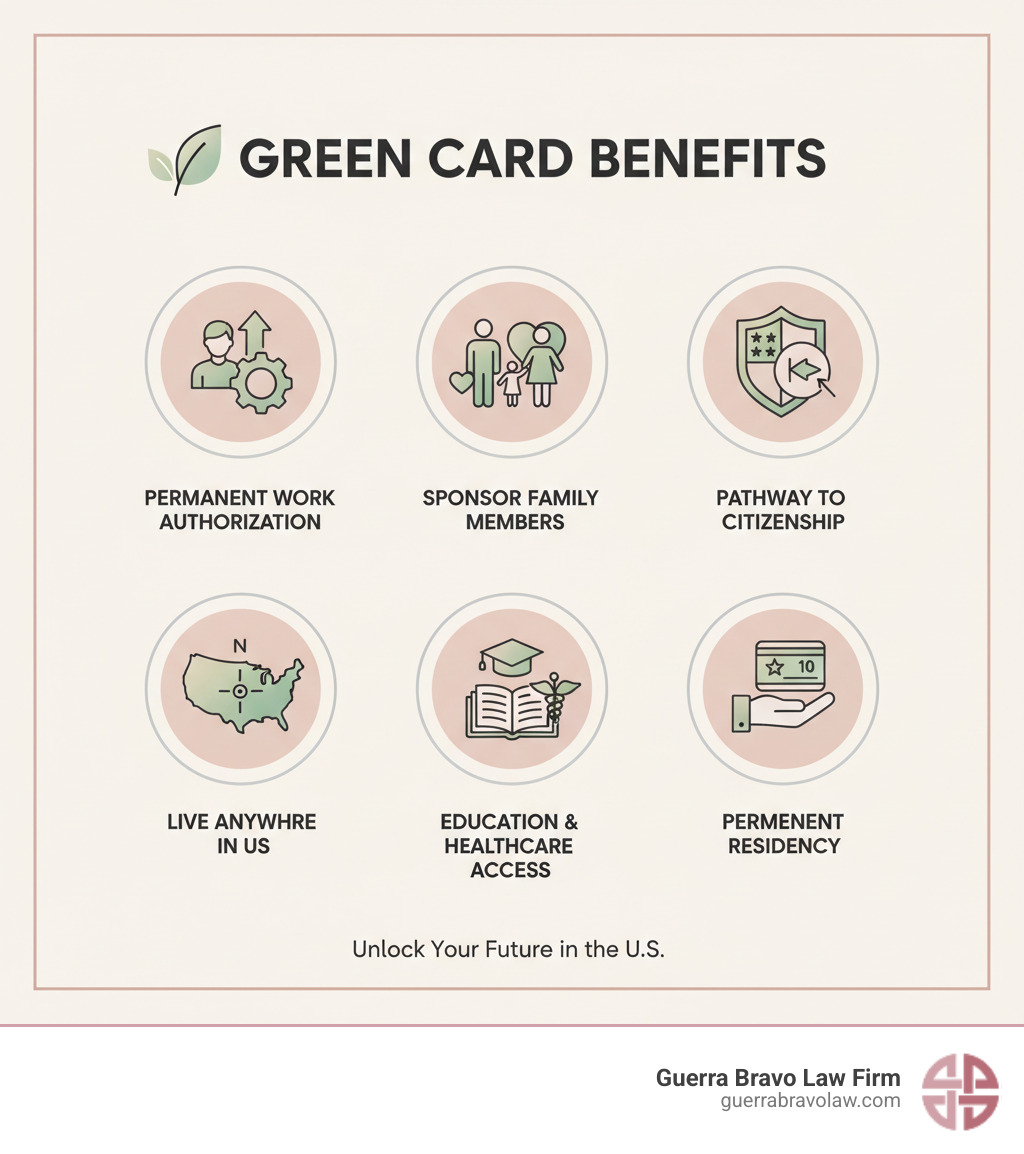
A Green Card, or Permanent Resident Card, grants you the right to live and work permanently in the U.S. It is the key to building a life, reuniting with family, and eventually pursuing U.S. citizenship.
However, the process is demanding. It involves determining eligibility, filing precise forms, attending appointments, and meeting strict deadlines. This guide simplifies the journey, showing you:
Green Card types and eligibility requirements
The two main application procedures
How to track your case while you wait
Common mistakes that lead to denial
When to seek professional legal help
Understanding the process and securing the right support is the difference between success and frustration.
Understanding Your Options: Green Cards, Visas, and Eligibility
What is a Green Card?
A Green Card, officially a Permanent Resident Card, authorizes you to live and work permanently in the United States. It allows you to accept jobs, buy property, and access education. Most importantly, it is the primary path to U.S. citizenship, typically after three to five years.
However, permanent residency comes with responsibilities. You must obey all laws, file taxes, and maintain your U.S. residence. Violating these conditions can lead to the loss of your status and even deportation. This is where expert green card application help is invaluable. With over 14 years of experience inside ICE and DHS, attorney Iris Guerra Bravo understands how immigration enforcement operates, providing the insider knowledge needed to protect your status.
Green Card Eligibility Categories
Choosing the correct eligibility category is the most critical first step. The main pathways include:
Family-Based Immigration: The most common path. U.S. citizens can sponsor spouses, children, parents, and siblings. Green Card holders can sponsor spouses and unmarried children. Wait times vary significantly between immediate relatives (no annual visa limits) and family preference categories (subject to long backlogs). Our Family Petitions page has more details.
Employment-Based Immigration: For individuals whose skills benefit the U.S. economy. Categories range from EB-1 (extraordinary ability) and EB-2 (advanced degrees) to EB-3 (skilled workers) and EB-5 (investors). Each has specific requirements for education, experience, or investment. Learn more on our Employment Petitions page.
Humanitarian Categories: Provides protection for vulnerable people. This includes individuals granted asylum or refugee status, as well as self-petitions for victims of abuse under the Violence Against Women Act (VAWA). Victims of trafficking (T visa) and other crimes (U visa) may also have a path to a Green Card.
Diversity Immigrant Visa Program: Also known as the Green Card Lottery, this program randomly selects applicants from countries with historically low rates of immigration to the U.S.
Other Categories: Special provisions exist for specific groups, such as those eligible under the Cuban Adjustment Act or Registry (for long-term residents). For an overview, see the official USCIS Green Card Eligibility Categories page.
Short-Term Alternatives: Visas
Many people first come to the U.S. on temporary nonimmigrant visas for a specific purpose, such as tourism (B-1/B-2 visa), study (F-1 visa), or work (H-1B, L-1 visas). You can find more information on our Tramites de Visa and Immigration Lawyer for Work Visas pages.
The Visa Waiver Program (VWP) allows citizens of certain countries to visit for up to 90 days without a visa, using an ESTA. A critical limitation of the VWP and tourist visas is that you cannot use them with the "preconceived intent" to immigrate. Entering as a tourist while secretly planning to apply for a Green Card can be considered fraud and lead to a denial.
Overstaying your visa or violating your status is a serious mistake. Overstaying by 180 days can trigger a three-year bar from re-entering the U.S.; overstaying by a year or more results in a ten-year bar. These bars can derail future Green Card applications. If you need to extend a visitor stay, you must file Form I-539 before your current status expires. Maintaining legal status is essential to keeping your American dream alive.
The Green Card Application Process: A Step-by-Step Guide
There are two main pathways to a Green Card, depending on whether you are applying from inside or outside the United States.
The Two Main Pathways: Adjustment of Status vs. Consular Processing
Understanding the difference is fundamental to getting the right Green card application help.

Adjustment of Status: Applying from Within the U.S.
If you are already in the United States in a valid legal status, you may be eligible to "adjust your status" to permanent resident without leaving the country. This process is done by filing Form I-485 with USCIS. A major benefit is that you can often apply for work and travel authorization, allowing you to remain in the U.S. with your family while your case is pending. However, be aware of the "preconceived intent" rule; entering on a temporary visa with a hidden plan to adjust status can be considered fraud. Our guide on Ajuste de Estatus con Visa de Turista explores this topic.
Consular Processing: Applying from Abroad
If you are outside the U.S. or ineligible to adjust status, you will use Consular Processing. After your initial immigrant petition is approved by USCIS, your case is transferred to the Department of State's National Visa Center (NVC). The NVC collects your documents and fees before scheduling an interview at a U.S. Embassy or Consulate in your home country. You must wait for visa approval abroad before you can travel to the U.S. as a permanent resident.
General Application Steps
Regardless of the pathway, the core process includes these steps:
File the Immigrant Petition: A sponsor files Form I-130 for a relative or Form I-140 for an employee. This establishes your eligibility. You can find official information on Form I-130 and Form I-140.
Wait for Your Priority Date: USCIS assigns a priority date when the petition is received. For categories with annual limits, you must wait for this date to become "current."
Monitor the Visa Bulletin: The Department of State publishes this monthly chart showing which priority dates are current. Immediate relatives of U.S. citizens can skip this wait.
File the Green Card Application: Once your date is current, you file Form I-485 (for Adjustment of Status) or Form DS-260 (for Consular Processing).
Attend a Biometrics Appointment: USCIS will collect your fingerprints, photo, and signature for background checks.
Complete the Interview: You will meet with an officer to review your application and confirm your eligibility.
Receive a Decision: If approved, you will receive your Green Card or an immigrant visa to enter the U.S.
Our guide on How to Get Green Card Texas Immediate Family provides more local context.
Common Forms and Filing Options
Correctly filing the right forms is crucial. The primary petition is either Form I-130 (family) or Form I-140 (employment). The main application is Form I-485 (in the U.S.) or Form DS-260 (abroad).
When filing Form I-485, you can often concurrently file Form I-765 for a work permit and Form I-131 for a travel document (Advance Parole). This allows you to work and travel while you wait.
USCIS encourages online filing for many forms. Creating a USCIS online account provides immediate receipt confirmation and makes it easier to track your case. If you file by mail, always use the latest form version, double-check the mailing address, and keep a complete copy of everything you send.
Navigating Your Application: From Pending to Approved
After you file, the waiting period begins. Staying organized and informed is a key part of successful Green card application help.
Tracking Your Case and What to Do While Pending

Once you file, USCIS will send a receipt notice with a 13-character receipt number. Use this number to monitor your case via the USCIS Case Status Online account tool.
While your case is pending, take these important steps:
Track Your Mail: Sign up for USPS Informed Delivery to see images of mail before it arrives. This helps ensure you don't miss critical documents like your Green Card or work permit.
Check Processing Times: Use the USCIS website to see estimated processing times for your form and service center, but remember these are just estimates.
Update Your Address: If you move, you must update your address with USCIS immediately using Form AR-11 or your online account. Missing a notice can cause your case to be denied. Use the USPS Look Up a ZIP Code tool to ensure the format is correct.
Get Travel Permission: If you are adjusting status, do not leave the U.S. without first obtaining Advance Parole (Form I-131). Leaving without it is considered abandoning your application.
Get Work Authorization: To work legally while your application is pending, you must apply for and receive an Employment Authorization Document (EAD) using Form I-765. Working without authorization can have severe consequences, including Work Permit Deportation.
Preparing for the Green Card Interview
The interview is your chance to confirm the details of your application with an officer. Proper preparation is key to success.
Organize Your Documents: Bring originals of all your key documents (passports, birth/marriage certificates) and copies of your entire application.
Review Your Application: Know every detail you submitted. Inconsistencies can raise red flags.
Prepare for Personal Questions: For marriage-based cases, be ready to answer detailed questions about your relationship and life together. Our guide on Top Immigration Marriage Questions can help.
Bring an Interpreter: If you are not fluent in English, you have the right to bring a qualified interpreter.
Be Professional: Dress appropriately, arrive early, and answer all questions honestly and clearly.
After Approval: Your New Life as a Permanent Resident
Once approved, you will receive a welcome notice and your physical Green Card in the mail. As a lawful permanent resident, you have the right to live and work anywhere in the U.S. permanently. Your responsibilities include obeying all laws, filing taxes, and notifying USCIS of any address changes within 10 days.
If you were married for less than two years at the time of approval, you will receive a conditional Green Card valid for two years. You must file Form I-751 to remove the conditions before it expires. If your card is ever lost, stolen, or damaged, file Form I-90 to apply for a replacement. For more on settling in, USCIS offers Resources for New Immigrants.
Avoiding Pitfalls and Finding Expert Green Card Application Help
The path to permanent residency is filled with potential missteps. Knowing where applications go wrong—and where to find reliable Green card application help—is critical for success.
Common Mistakes and How to Avoid Them
Precision is everything in immigration. Avoid these common errors:
Inaccurate or Incomplete Information: Double-check every name, date, and detail on your forms. Never hide information; USCIS will likely find it.
Missing Deadlines: Immigration law is strict. Missing a deadline for a Request for Evidence (RFE) or an appointment can lead to an automatic denial. Use a calendar to track all dates.
Insufficient Evidence: You must prove your eligibility. For family cases, this means providing strong evidence of a genuine relationship (e.g., joint finances, photos). For employment cases, it means documenting your qualifications. A denial can be devastating, as explained in our article Que Pasa Si Me Niegan la Residencia Por Matrimonio.
Preconceived Intent: Entering the U.S. on a temporary visa with a hidden plan to apply for a Green Card is considered misrepresentation and can lead to denial.
Visa Overstays and Violations: Overstaying a visa can trigger 3- or 10-year bars on re-entry. If you need more time as a visitor, file Form I-539 to request an extension before your status expires. Other violations and certain criminal convictions can also make you inadmissible.
Where to Find Reliable Green Card Application Help
With so much at stake, choose your help wisely.
Official Government Resources: The USCIS website is the authoritative source for all forms, instructions, and policies. It is always free.
Authorized Non-Profit Organizations: Many DOJ-accredited non-profits offer low-cost or free legal services to qualifying individuals.
Licensed Immigration Attorneys: For complex cases, or for anyone seeking professional guidance, a licensed attorney is the best choice. They can provide legal advice and represent you before USCIS. Learn more in our guide to Abogados de Migracion.
Avoiding Scams: Be wary of "notarios publicos" and "immigration consultants." In the U.S., a notary is not a lawyer and cannot give legal advice. Only work with a licensed attorney or an accredited representative.
The Role of an Immigration Lawyer in Your Green Card Application Help
An experienced immigration lawyer is more than a form-filler; they are a strategic partner. An attorney provides:
A Personalized Case Strategy: Assessing your unique situation to identify the best path forward and anticipate challenges.
Expertise in Complex Cases: Handling issues like criminal records, immigration violations, or prior denials, which often require legal waivers.
Error and Delay Prevention: Ensuring your application is complete, accurate, and filed correctly to minimize the risk of RFEs and denials.
Interview Preparation and Representation: Preparing you for the USCIS interview and, in many cases, attending with you to address legal issues on the spot.
At Guerra Bravo Law Firm, attorney Iris Guerra Bravo's 14+ years of insider experience with ICE and DHS gives us a unique understanding of how the system works. We use this knowledge of US Immigration Law to build strong cases, especially in high-stakes situations involving Understanding Removal Defense in Texas Immigration Courts. We know how to build a case that is designed to succeed, and we know Can a Lawyer Stop Deportation when the situation becomes critical.
Frequently Asked Questions about the Green Card Process
Here are answers to the most common questions we receive from clients in McAllen, Brownsville, and across the Rio Grande Valley about Green card application help.
How long does the Green Card application process take?
There is no single answer, as processing times vary dramatically. Key factors include:
Your Eligibility Category: Immediate relatives of U.S. citizens (spouses, minor children, parents) generally have the fastest path, often taking 10-24 months, as there are no annual visa limits.
Preference Categories: Family preference and most employment-based categories have annual caps, creating backlogs that can last from a few years to over a decade.
Country of Origin: Applicants from countries with high immigration demand (like Mexico, India, China, and the Philippines) often face longer waits due to per-country limits.
The Visa Bulletin: This monthly publication from the Department of State determines when you can file your final application based on your priority date.
USCIS Caseloads: Processing times differ between USCIS service centers and can change without notice.
Case-Specific Issues: A perfectly prepared application will move faster. A Request for Evidence (RFE) can add months to your wait time.
Can I work in the U.S. while my Green Card application is pending?
Yes, but only after you receive proper authorization. If you file Form I-485 to adjust your status, you are eligible to apply for an Employment Authorization Document (EAD), or work permit, by filing Form I-765.
Most applicants file Form I-765 concurrently with their I-485. Once your EAD is approved and you have the card in hand, you can work for any U.S. employer. Working without an EAD is a serious immigration violation that can jeopardize your Green Card application and lead to removal proceedings. Learn more about the risks of Work Permit Deportation.
What happens if my Green Card application is denied?
A denial is serious, but it may not be the end of the road. Your options depend on the reason for the denial.
Often, before a denial, USCIS will issue a Request for Evidence (RFE) or a Notice of Intent to Deny (NOID). These are your chances to provide more information and save your case. A strong, timely response is critical.
If your application is ultimately denied, you may be able to:
File an Appeal: Challenge the decision with the Administrative Appeals Office (AAO) or the Board of Immigration Appeals (BIA).
File a Motion: You can file a motion to reopen with new evidence or a motion to reconsider if you believe USCIS made a legal error.
Deadlines for appeals and motions are extremely strict. If you receive a denial, you must contact an experienced immigration attorney immediately. A denial can also place you in removal (deportation) proceedings if you are out of status. An attorney can assess your case, determine the best strategy, and, if necessary, defend you in court. Our article Can a Lawyer Stop Deportation explains how crucial legal representation is in these situations. For marriage-based cases, see our guide on Que Pasa Si Me Niegan la Residencia Por Matrimonio.
Conclusion: Secure Your American Dream with Confidence
The path to a Green Card is complex, and the stakes are incredibly high. Green card application help is not just about paperwork; it's about strategic navigation of a difficult system to avoid costly mistakes that can derail your future.
At Guerra Bravo Law Firm, we provide the battle-tested expertise your case deserves. Serving McAllen, Brownsville, and the entire Rio Grande Valley, our firm is defined by attorney Iris Guerra Bravo's 14+ years of insider experience with ICE and DHS. We know how immigration officers think and what it takes to build a successful case, especially when facing complications like prior violations or removal proceedings.
Don't leave your American dream to chance. We develop individualized legal strategies to protect your future in the United States. Whether you are starting your application or facing a challenge with a pending case, we are here to help.
Take the next step with confidence. Explore nuestros servicios de inmigración to learn more, or contact us today to schedule a consultation and secure your future.