Finding the Perfect Visitor Visa Lawyer: Don't Travel Without One
Why Securing a Visitor Visa Lawyer is Your First Step to U.S. Travel
A visitor visa lawyer is an immigration attorney specializing in helping foreign nationals get B-1 or B-2 visas for temporary U.S. travel. If you're seeking legal help with visitor visas, here's what you need to know.
How a Visitor Visa Lawyer Helps:
Reviews and prepares your DS-160 application to avoid common errors
Develops a case strategy to prove your intent to return home
Gathers compelling documentation to demonstrate strong ties to your home country
Prepares you for the consular interview with coaching and practice
Handles complex cases involving prior denials or immigration violations
Advises on extensions of stay or status changes once you're in the U.S.
The U.S. immigration system is notoriously complex. As one source notes, "Immigration laws are complicated, border patrol and immigration officers can be harsh, and people can be abusive to immigrants for no good reason."
Even for a simple visitor visa, hidden issues can derail your application. A mistake on your form, weak documentation, or a poor interview answer can lead to a denial that impacts future travel to the U.S. for years.
While not legally required, professional legal help is invaluable. The stakes are high, and immigration law is a specialized field. The right attorney brings knowledge that can mean the difference between approval and denial.
For families, tourists, or those seeking medical care, a denial is more than a setback—it's a closed door to important opportunities and connections.
This guide covers everything you need to know about visitor visas and how legal counsel can help you steer the process with confidence.
Understanding U.S. Visitor Visas: B-1, B-2, and VWP
Before applying, you must choose the right visa path. The U.S. immigration system has different options for different purposes, and a wrong choice can derail your trip.
Two key agencies manage this process: The U.S. Department of State issues visas abroad, while U.S. Citizenship and Immigration Services (USCIS) handles requests inside the U.S., like extensions. Knowing their roles prevents delays.
What is a B-2 "Visitor for Pleasure" Visa?
The B-2 visa is for temporary travel for pleasure. Anyone can apply without a U.S. sponsor. Permitted activities include:
Tourism and vacation: Sightseeing, holidays, and exploring the U.S.
Visiting family or friends: Spending time with loved ones in the U.S.
Medical treatment: Seeking care in the U.S. (requires specific proof of need and ability to pay).
Social events: Attending amateur sports or music events without pay.
Short recreational courses: Enrolling in non-credit courses, like a cooking class.
Accompanying partners: Allows unmarried domestic partners to travel with their partners on temporary visits.
The B-1 "Visitor for Business" Visa vs. B-2
The B-1 visa is for temporary business activities, not pleasure. The critical rule is that you cannot perform work or be paid by a U.S. source. B-1 activities include:
Consulting with business associates.
Attending professional, scientific, or business conferences.
Negotiating contracts.
Settling an estate.
If your situation involves working or being on a U.S. payroll, you need a different visa. For those cases, consulting with an Immigration Lawyer for Work Visas is your best option. A B-1 stay is usually granted for one to six months. A visitor visa lawyer can help you choose the correct visa and avoid costly mistakes.
The Visa Waiver Program (VWP) Alternative
Citizens of certain countries may use the Visa Waiver Program (VWP) for short trips. Using the Electronic System for Travel Authorization (ESTA), you can stay up to 90 days for tourism or business. It's faster than a traditional visa application.
However, the VWP has strict limits: you cannot extend your stay beyond 90 days or change your status to another visa category while in the U.S. If you arrive on ESTA and want to stay longer or switch to a student visa, you are not permitted to do so.
Always check if your country and travel purpose qualify for the VWP. For stays over 90 days or more complex situations, a B-2 visa provides more flexibility and peace of mind, and guidance from a visitor visa lawyer is recommended.
The B-2 Visa Application Journey: From Paperwork to Interview
The B-2 visa process has one goal: proving "nonimmigrant intent." You must convince the consular officer you are a genuine visitor who will return home. The burden of proof is on you. You must show, not just say, that you will return home.
Proving Your Eligibility for a B-2 Visa
To qualify, you must prove four key points:
Temporary purpose: Your trip is for a specific, limited time.
Intent to depart: You will leave the U.S. when your visit ends.
Financial ability: You can pay for your entire trip without working illegally.
Strong ties abroad: You have compelling reasons to return home, such as a job, family, or property.
Essential Documents for Your Application
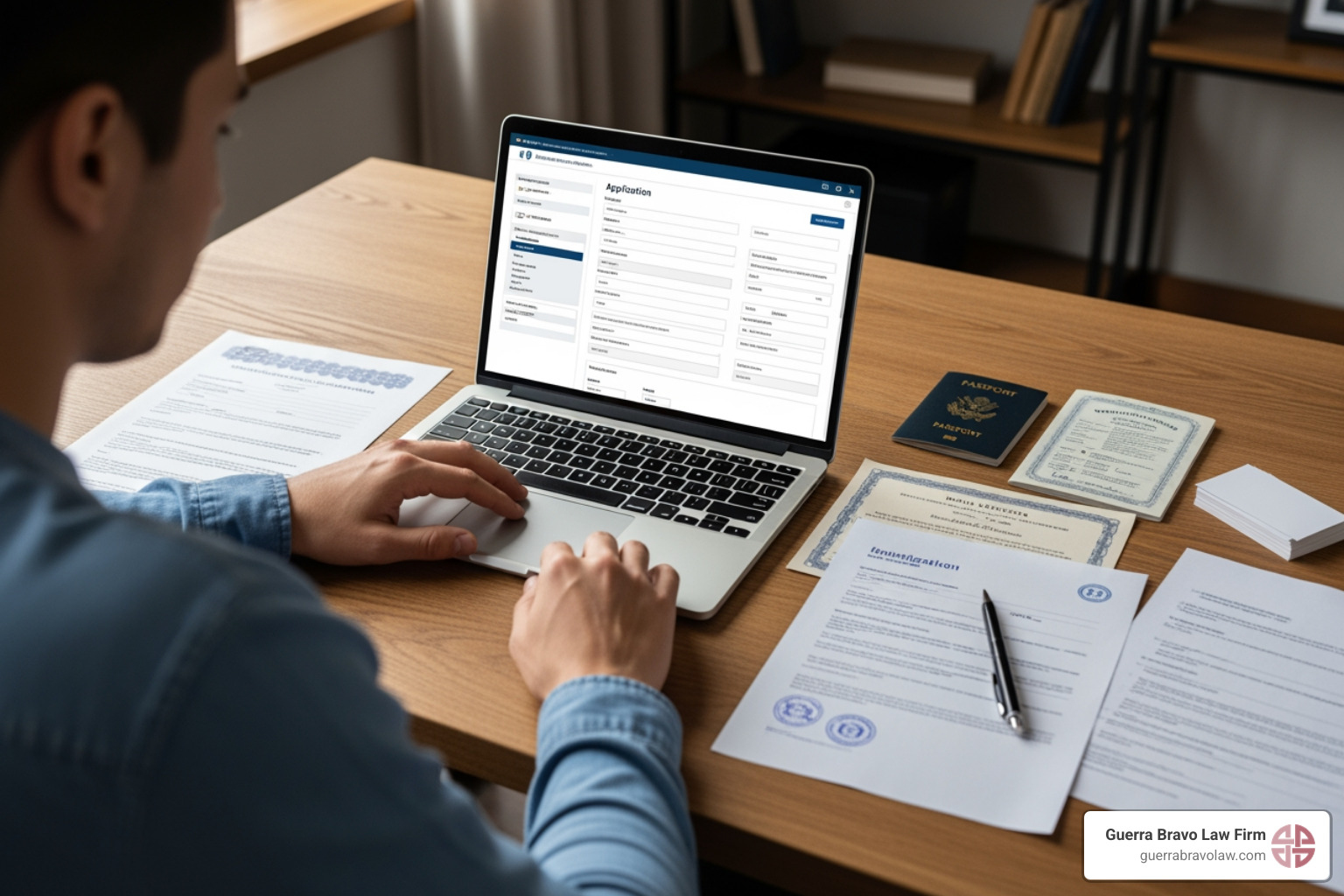
Your application package tells your story. Core documents include:
Form DS-160 confirmation page.
A valid passport.
Application fee payment receipt.
One 2x2 inch photograph meeting requirements.
Supporting documents are crucial for proving your ties and purpose:
Financial stability: Bank statements, property deeds, tax returns.
Employment: A letter from your employer confirming your job, salary, and approved leave. For self-employed individuals, business registration and financial records.
Family ties: Marriage and birth certificates.
Travel plans: A detailed itinerary and an invitation letter from your U.S. host, if applicable.
Medical treatment: Letters from doctors and proof of payment ability.
A visitor visa lawyer can review your documents to ensure your evidence tells a convincing story. Our 14+ years of government agency experience give us insight into what officers look for.
The Consular Interview: What to Expect
The consular interview is brief but critical. Be prepared to answer questions clearly and honestly.
Trip's Purpose: Be specific. "Tourism" is vague; "Visiting my sister in Boston for her graduation" is concrete.
Itinerary: Know your travel plans. A clear plan shows you are a serious visitor.
Ties to Home: Expect questions about your job and family. These assess your ties to your home country.
Honesty: Honesty is non-negotiable. Even small contradictions can derail an application. If you don't know an answer, say so.
Interview preparation with a visitor visa lawyer is key. We help you practice clear answers and build confidence for your interview.
The Critical Role of a Visitor Visa Lawyer
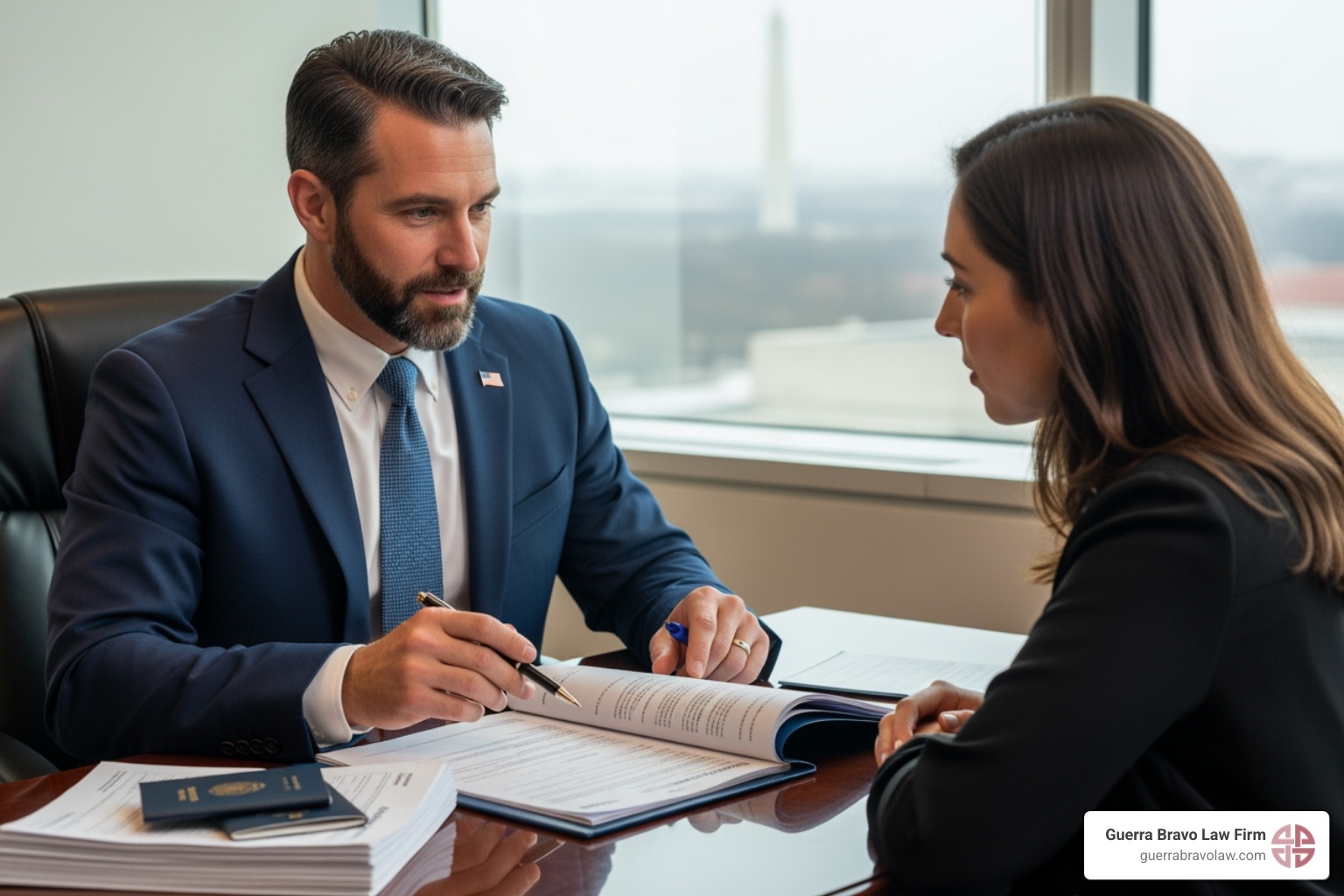
Applying for a visitor visa alone is risky. An experienced visitor visa lawyer is a strategic advisor who strengthens your application and helps you steer complex US Immigration Law.
Just as you wouldn't perform your own surgery, handling intricate immigration law requires a professional. One mistake can have long-term consequences.

How a visitor visa lawyer Can Maximize Your Approval Chances
A lawyer provides comprehensive support to strengthen your case:
Developing a case strategy: We analyze your profile, identify weaknesses (like limited travel history or a prior denial), and create a custom strategy to address them proactively.
Ensuring meticulous documentation: We guide you in gathering the most effective documents to tell a coherent story and prove your intent to return home.
Preventing common errors: We review your DS-160 form and evidence to catch small mistakes that can trigger red flags or automatic denials. Our insider knowledge from 14+ years with ICE and DHS helps us spot what officers look for.
Providing interview coaching: We conduct mock interviews to prepare you for tough questions, ensuring your answers are confident, honest, and aligned with your application.
Navigating complex regulations: We apply our expertise in the Code of Federal Regulations (CFR) and other legal frameworks to strengthen your case.
Handling Complex Cases: Prior Denials and Waivers
For complex cases involving prior denials or immigration violations, a lawyer's help is indispensable. We analyze past denials, help you address the officer's concerns with new evidence, and determine if a waiver of inadmissibility is needed to overcome legal barriers to entry.
What to Look for in a Top visitor visa lawyer
When choosing your legal representative, look for:
Direct experience: A proven track record in B-2 visa cases.
Professional standing: Membership in organizations like the American Immigration Lawyers Association (AILA), which signifies a commitment to ethical practice.
Positive reviews: Client testimonials to gauge effectiveness and communication style.
Transparent fees: A clear, upfront fee structure. Legal fees are separate from non-refundable government application fees.
Authorization: A licensed attorney or a DOJ-accredited representative. Avoid "notarios" or unauthorized "immigration consultants." Use the AILA Lawyer Directory to find qualified professionals.
Guerra Bravo Law Firm offers all these qualities, backed by 14+ years of insider experience with ICE and DHS. We use our knowledge of how the system truly works to build battle-tested strategies for our clients.
After You Arrive: Stays, Extensions, and Common Pitfalls
A visa stamp doesn't guarantee entry. A U.S. Customs and Border Protection (CBP) officer at the port of entry makes the final decision on your admission and length of stay.
How Long Can You Stay and Can It Be Extended?
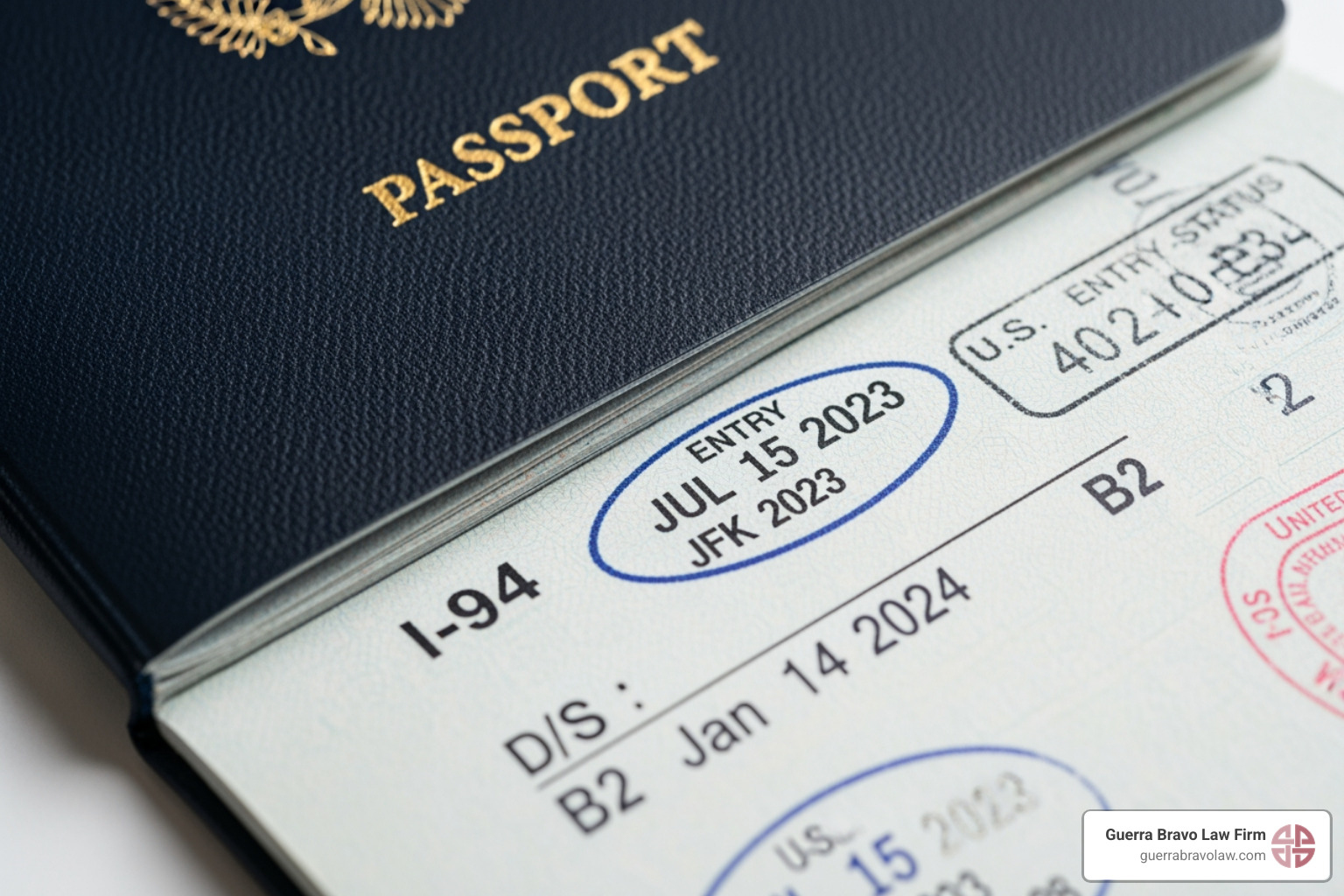
Most B-2 visitors are admitted for up to six months, but the CBP officer can grant a shorter period. Your authorized stay is recorded on your electronic I-94 Arrival/Departure Record. Check it online immediately after entry to know your exact departure date.
If you need more time for a valid, unexpected reason, you can file Form I-539 with USCIS to request an extension. You must file before your current stay expires. A visitor visa lawyer can be invaluable in helping you prepare a strong extension application that addresses USCIS's concerns.
The Serious Consequences of Overstaying Your Visa
Overstaying your visa is a serious violation with long-term consequences. Even one day of overstay automatically cancels your visa.
An overstay of more than 180 days triggers a three-year ban from re-entering the U.S.
An overstay of one year or more results in a ten-year ban.
An overstay also makes it extremely difficult to get any future U.S. visa and can lead to detention and deportation. The lesson is simple: always respect your I-94 departure date.
Scams to Avoid: "Notarios" and Unauthorized Consultants
In the Rio Grande Valley, immigration fraud is a common problem. Be wary of "notarios" or "immigration consultants" promising cheap, fast solutions. In the U.S., a notary public only witnesses signatures; they cannot give legal advice. The term "notario" is often used to mislead immigrants, as it means a high-level attorney in many Latin American countries.
These unauthorized practitioners give bad advice that can permanently damage your immigration record and even lead to deportation. Always work with a licensed attorney or a DOJ-accredited representative. Verify credentials using the AILA Lawyer Directory or by checking the DOJ's official list. We encourage everyone in our community to protect yourself from fraud by knowing your rights and verifying credentials before hiring anyone for immigration help.
Frequently Asked Questions about Visitor Visas
What are the typical fees for a visitor visa lawyer?
Legal fees for a visitor visa lawyer vary by case complexity. Many firms, including ours, offer flat-fee services for standard B-2 applications, which can range from a few hundred to several thousand dollars for more complex cases. This is separate from the government's non-refundable application fees. We provide a transparent fee schedule during your consultation.
Can my family come with me on a B-2 visa?
Yes, your spouse and unmarried children under 21 can apply for their own B-2 visas to accompany you. However, each family member must submit a separate application and independently qualify by proving their own nonimmigrant intent and strong ties to your home country.
What are my options if my B-2 visa is denied?
A visa denial is not necessarily the end. The most common reason for a B-2 denial is under Section 214(b) of U.S. immigration law, which means the officer was not convinced of your intent to return home. You can reapply, but it's crucial to first address the reasons for the denial.
A visitor visa lawyer can analyze your previous application, identify weaknesses, and help you build a much stronger case for reapplication. With our 14+ years of insider experience with ICE and DHS, we understand what officers are looking for and can help you build a case that addresses their concerns directly. While a denial can be discouraging, many applicants who were initially denied go on to receive their visas successfully with careful preparation.
Conclusion: Secure Your U.S. Visit with Expert Legal Guidance
The U.S. visitor visa process is complex, and mistakes can have long-lasting consequences, affecting your ability to travel to the U.S. in the future. Partnering with a knowledgeable visitor visa lawyer removes the guesswork and provides peace of mind. An attorney helps you build a credible case that demonstrates your intent to follow U.S. immigration law.
At Guerra Bravo Law Firm, we serve clients in McAllen, Brownsville, Edinburg, and across the Rio Grande Valley. We leverage over 14 years of insider experience with ICE and DHS to provide battle-tested, individualized legal strategies for even the most complex cases. We don't just process applications; we fight for your right to visit.
Your visa application is too important to leave to chance. A visitor visa lawyer is your most valuable asset for navigating the complexities of the immigration system.
Ready to start your journey with confidence? Explore Our Services to learn how we can help you secure your U.S. visitor visa and make your travel dreams a reality.