
November 26, 2025
Trump's Detention Comeback: Families in South Texas Facilities
Trump’s Detention Comeback: Families in South Texas Facilities
The Return of Family Detention in South Texas
The trump administration immigrant family detention resumption has brought families with children back to detention centers in South Texas after a three-year pause. This policy reversal marks a dramatic shift in how the U.S. handles immigrant families at the border.
Key Facts About the Resumption:
-
When: Family detention resumed in early 2025 after being halted during the Biden administration
-
Where: Two major Texas facilities reopened - Dilley (2,400 beds) and Karnes County (830 beds)
-
Who’s Detained: Families from diverse countries including Colombia, Romania, Iran, Angola, Russia, Armenia, Turkey, and Brazil
-
Operators: Private prison companies CoreCivic and GEO Group run the facilities under federal contracts
-
Legal Status: The policy faces ongoing challenges related to the Flores Settlement Agreement
The practice of detaining families together isn’t new. It began under President George W. Bush, expanded dramatically under President Obama in 2013-14, and continued through President Trump’s first term. The Biden administration then halted long-term family detention in 2021, shuttering these same facilities.
Now they’re open again.
Immigration advocates warn that detention harms children’s mental health and undermines families’ ability to steer their legal cases. Medical professionals who visited detention centers during the first Trump administration documented behavioral regression, self-harm, and eating disorders in detained children.
The Trump administration frames the policy as necessary to deter illegal immigration and maintain border control. They’re pursuing legal action to modify or terminate the Flores Settlement, which limits how long children can be detained.
For families caught in this system, understanding their rights and options is critical. The rules are complex, enforcement is aggressive, and the stakes couldn’t be higher.
The Return of Family Detention: What’s Happening Now
The trump administration immigrant family detention resumption has turned back the clock in South Texas. After three years of near-empty facilities, the detention centers are filling up again with families—parents and children who crossed the border seeking safety or opportunity.
This wasn’t inevitable. The Biden administration had essentially ended long-term family detention, repurposing these same buildings for other uses. But now? The doors are open again, and families are being processed through a system that many thought was being phased out for good.
Reopened Texas Facilities: Karnes and Dilley
Two facilities are at the center of this policy shift, both in South Texas, both run by private companies under federal contracts.
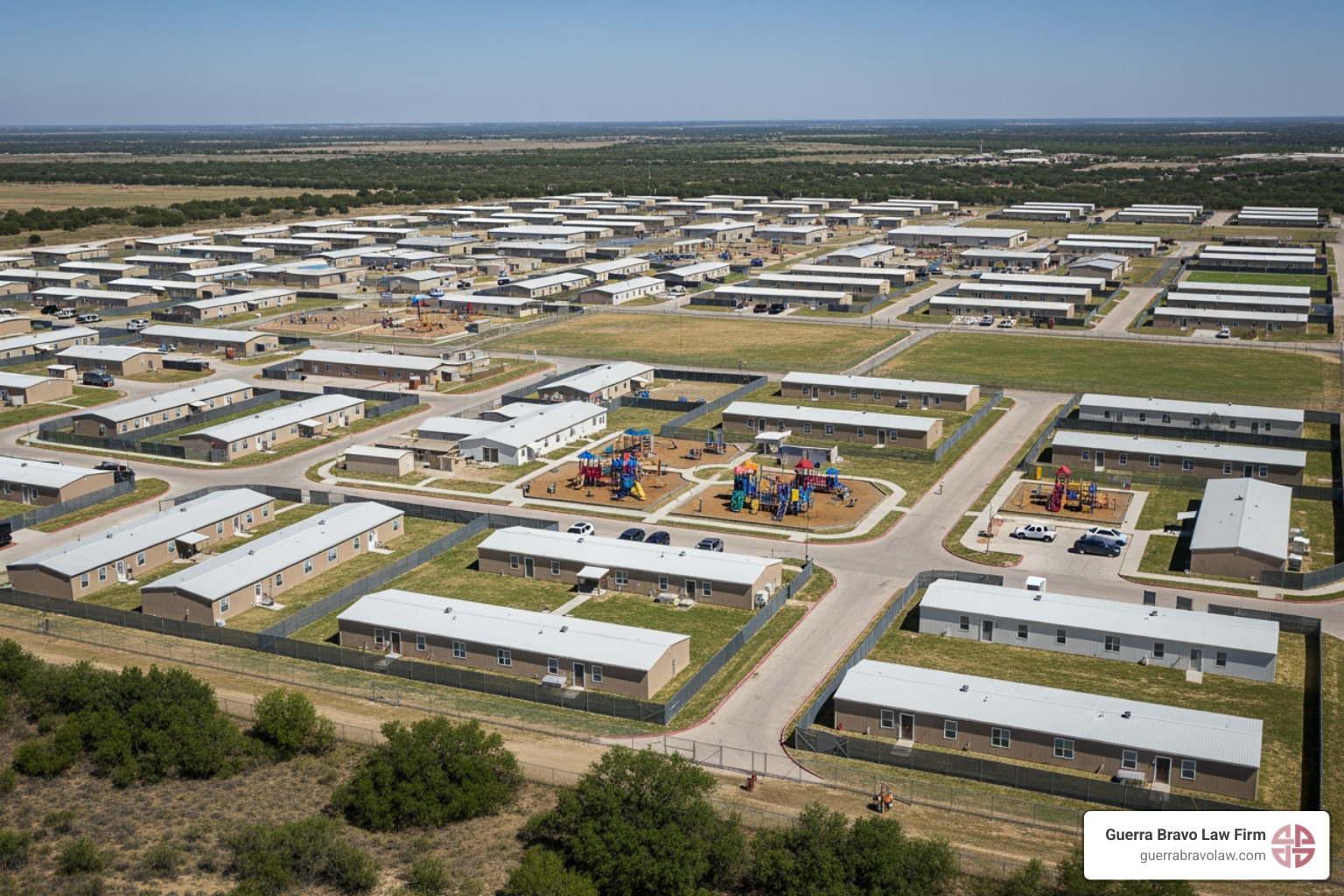
The South Texas Family Residential Center in Dilley is the bigger of the two. Located about 70 miles southwest of San Antonio, this sprawling fifty-acre campus can hold up to 2,400 people—making it the largest family detention facility in the country. CoreCivic operates it under a contract that runs through 2030 and is expected to generate around $180 million annually. The facility’s modular housing units are sometimes called “cottages,” though that word doesn’t quite capture what detention actually feels like.
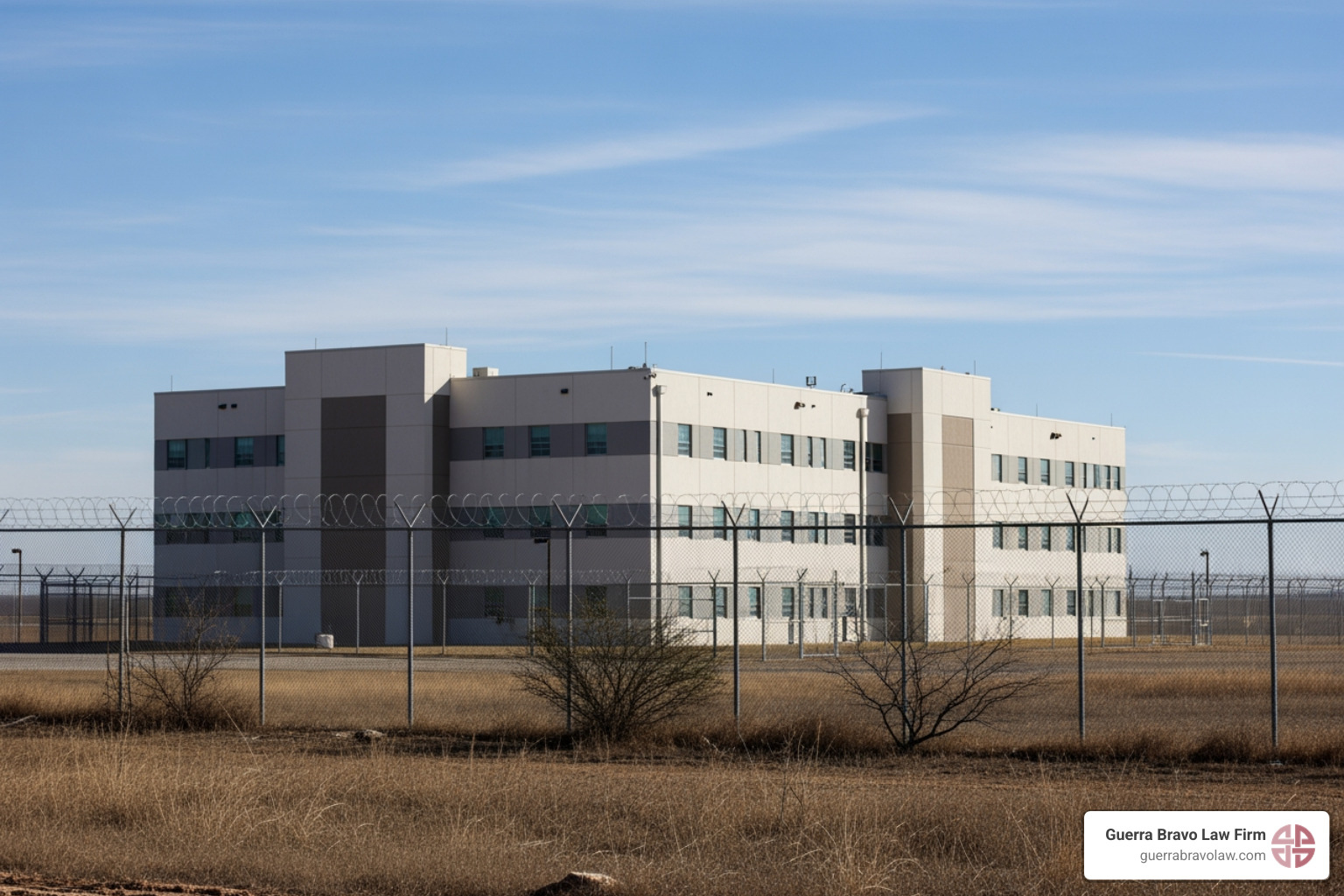
Karnes County Immigration Processing Center sits about 60 miles southeast of San Antonio. The GEO Group runs this 830-bed facility (expandable to 1,328), and it was actually the first to resume family detentions under the new administration. Within days of President Trump taking office, 12 to 15 families arrived at Karnes—people from Colombia, Romania, Iran, Angola, Russia, Armenia, Turkey, and Brazil. The concrete-block building houses families in rooms with bunk beds and private bathrooms, creating what some describe as a “barrack-like” atmosphere.
Lawyers who’ve been in contact with detained families confirmed the resumption at both facilities. CoreCivic’s CEO, Damon Hininger, didn’t mince words about what’s coming: “We are entering a period when our government partners—particularly our federal government partners—are expected to have increased demand.” Read more about CoreCivic’s expectations for government needs.
The Role of Private Prison Contractors
Here’s something that doesn’t get talked about enough: private companies are making billions from family detention.
CoreCivic and GEO Group—the two corporations running Dilley and Karnes—have signed multibillion-dollar contracts with the federal government. The Dilley contract alone is worth $180 million per year. CoreCivic is already anticipating “continued robust contracting activity throughout 2025” to meet what they call “growing government needs.”
Texas isn’t just participating in this expansion—it’s leading it. The state already holds 12,186 undocumented immigrants across 21 detention facilities, reportedly the most in any state. Public records obtained through ACLU litigation show ICE is considering expanding a facility in Laredo and opening another in Henderson.
The infrastructure is already here. The contracts are signed. And families are arriving at a pace that suggests this is just the beginning of a much larger operation.
For families caught in this system—many of whom fled dangerous situations back home—the reopening of these facilities means uncertainty, separation from communities, and limited access to legal help. Understanding what’s happening and knowing your rights has never been more important.
The Trump Administration Immigrant Family Detention Resumption: Rationale and Legal Battles
The trump administration immigrant family detention resumption isn’t happening in a vacuum. It’s part of a much larger strategy to reshape how America handles immigration—and it’s already facing serious legal pushback.
Stated Goals: Deterrence and Broader Enforcement
The administration’s reasoning for bringing families back into detention centers comes down to one word: deterrence. The thinking goes like this: if families know they’ll be detained together when they cross the border without authorization, they simply won’t come. It’s meant to send a clear message that unauthorized entry leads to detention and swift removal.
But family detention is really just one piece of a bigger puzzle. The administration has set an ambitious goal of deporting one million immigrants annually—more than triple any previous record. That’s where Tom Homan comes in. As the administration’s “border czar,” Homan has been instrumental in crafting these policies. He’s pledged to deport families together in a humane way, emphasizing that keeping families united during removal is actually more compassionate than separating them.
DHS spokesperson Tricia McLaughlin put it bluntly: “The best option for illegal aliens is to self deport. If they leave now, they may still have an opportunity to return and live the American dream.”
The financial commitment behind this strategy is staggering. The administration’s legislative package, signed on July 4, 2025, set aside $45 billion for expanded immigration detention capacity. Interestingly, the administration frames family detention as “promoting family unity”—though critics point out that detaining families together doesn’t make the detention itself any less harmful.
The Flores Settlement and Ongoing Legal Challenges
Here’s where things get legally complicated. The trump administration immigrant family detention resumption runs headlong into a legal agreement that’s been protecting immigrant children for nearly three decades.
The Flores Settlement Agreement dates back to 1997, and it’s been the gold standard for how the government treats children in immigration custody. The agreement is pretty straightforward: kids should be held in the least restrictive setting possible, and generally speaking, they shouldn’t be detained for more than 20 days. It’s been the main legal barrier preventing long-term family detention. The history of this settlement shows just how critical it’s been in protecting children’s rights.
The current administration isn’t happy about these constraints. On April 12, 2025, the Department of Justice filed a motion to terminate the Flores Settlement entirely. If successful, this would remove the 20-day limit and potentially allow families to be detained indefinitely while their cases work through the system.
In the meantime, family detention facilities are supposed to follow the 2020 Family Residential Standards—guidelines established during the first Trump administration. These standards require ICE field offices to have Field Office Juvenile Coordinators and on-site compliance officers. Facilities are supposed to undergo monthly inspections and annual reviews.
But there’s often a gap between what’s supposed to happen on paper and what actually happens behind those walls. Court filings seeking enforcement of the Flores settlement have repeatedly exposed potential violations, raising serious questions about whether these facilities are truly complying with even the basic standards meant to protect children.
For families facing detention, understanding these legal battles isn’t just academic—it could be the difference between spending weeks or months behind chain-link fences while waiting for their day in court.
A Look Back: Family Detention Under Past Administrations
The trump administration immigrant family detention resumption didn’t appear out of nowhere. This controversial practice has deep roots in U.S. immigration policy, cycling through different administrations with varying degrees of intensity. Understanding this history helps us see where we are now—and why it matters so much to families caught in the system.
From Bush to Obama: The Expansion of Family Detention
The practice of holding immigrant families together in detention facilities first began under President George W. Bush. In 2007, his administration established the initial Family Residential Standards (FRS), creating the first official guidelines for these facilities. At the time, family detention was relatively limited in scope—more of an exception than a rule.
Everything changed under President Obama. When Central American families began arriving at the southern border in unprecedented numbers during 2013-14, the administration responded by dramatically expanding detention capacity. We’re talking about a massive increase—from just 90 beds to 3,700 beds in a short period.
This expansion included opening the South Texas Family Residential Center (STFRC) in Dilley and converting the Karnes County facility into a family detention center. These are the same facilities that are now back in operation under the current administration.
The Obama-era expansion drew fierce criticism from immigrant advocates and child welfare experts. Legal challenges mounted as evidence emerged about the harmful effects on children’s wellbeing. What made this period particularly significant was that the administration’s initial expansion operated without the full constraints of the Flores Settlement Agreement—including the 20-day detention limit for children—until courts intervened.
The first Trump administration took an even harder line. In April 2018, it implemented the notorious “zero tolerance” family separation policy, which resulted in nearly 2,000 children being separated from their parents in just six weeks. The public outcry was swift and intense. Beyond separation, the administration actively worked to weaken protections for detained children and sought to terminate the Flores agreement altogether.
The Biden Administration’s Shift Away from Family Detention
The Biden administration took U.S. immigration policy in a completely different direction when it came to family detention.
In 2021, President Biden halted the practice of family detention, marking a significant policy reversal. The administration began by shuttering a family detention facility in Pennsylvania that had operated since 2001, converting it to an adult-only facility.
Then came the repurposing of both Dilley and Karnes. These facilities transitioned away from long-term family detention, sometimes being used for short-term processing or adult detention instead. The administration’s commitment to this approach was clear and measurable.
By December 2021, something remarkable happened: the DHS’s total family detention population reached zero. Not a single family remained in long-term detention.
The Biden administration emphasized alternatives to detention (ATDs) instead. Programs like the Family Case Management Program focused on case management, regular check-ins, and monitoring rather than physical confinement. These approaches were recognized as both more humane and more cost-effective than detention.
This three-year pause in family detention made the trump administration immigrant family detention resumption all the more jarring. We’ve gone from zero families in detention to hundreds being held at reopened Texas facilities—a complete policy reversal that’s affecting real families right now.
The Human Cost: Conditions and Concerns Inside Detention Centers
When we talk about the trump administration immigrant family detention resumption, we need to pause and think about what this really means for the families—especially the children—caught in the system. Behind every policy decision, there are real people experiencing profound impacts that can last a lifetime.

Reported Conditions and the Well-being of Children
Even when facilities claim to meet official standards, the reality inside often tells a different story. Immigration advocates, pediatricians, and human rights organizations have been sounding the alarm for years: family detention “harms children’s health and well-being, undermines the parent-child relationship, and obstructs children and families from accessing legal counsel.” Many experts go further, describing the detention of children with their parents as a form of “government child abuse.”
The experiences of detained families paint a troubling picture. Court filings from June 2025 describe adults fighting children for access to clean water. Families report inadequate medical care and overcrowded housing. These aren’t just complaints—they’re documented in testimony from detained families seeking to enforce their rights.
Dr. Alan Shapiro, a child welfare advocate who visited detention centers during the first Trump administration, documented heartbreaking changes in detained children. He observed behavioral regression—kids acting younger than their age. He saw anger, thoughts of self-harm, and suicidal ideation. Some children developed eating disorders that weren’t present before detention. These aren’t minor issues that fade quickly. They’re serious mental health concerns that can shape a child’s entire future.
The allegations get even darker. Employees at privately-run detention facilities have been accused of sexually assaulting migrants, violating their religious freedom, and using solitary confinement as punishment. Immigration charges are civil offenses—not criminal ones—which means detained immigrants don’t receive the same legal protections as people accused of crimes.
Implications of the Trump administration immigrant family detention resumption
The trump administration immigrant family detention resumption creates obstacles that reach far beyond the physical walls of these facilities. When families are detained, they face immediate practical barriers that can determine the outcome of their cases.
Access to legal help becomes incredibly difficult. Imagine trying to find a lawyer, gather documents, and prepare a complex legal case while you’re confined to a remote facility. You can’t easily meet with attorneys. You can’t retrieve important papers from wherever you were staying. You can’t research your options or connect with community resources. Detention essentially stacks the deck against families in an already complicated legal system.
For asylum seekers fleeing violence and persecution, detention adds trauma on top of trauma. These families have already survived horrific experiences—that’s why they’re seeking asylum in the first place. Now they’re confined, uncertain about their future, and struggling to articulate their stories in a way that meets legal requirements. The psychological toll of detention can actually impair someone’s ability to present their asylum claim effectively, which is a cruel irony for people desperately seeking safety.
The long-term consequences for children are what keep advocates up at night. Research shows that detention can lead to post-traumatic stress disorder (PTSD), depression, and anxiety in children. The stress of confinement, combined with uncertainty about what happens next, can affect a child’s development for years to come. These aren’t abstract statistics—they’re real kids who may struggle with the effects of detention well into adulthood.
This raises an important question: does family detention actually work as a deterrent, or does it simply cause documented harm? Critics point to alternatives like the Family Case Management Program (FCMP), which achieved a 99% compliance rate with immigration proceedings at a lower cost than detention. The program showed that families will show up for their hearings when they’re treated humanely and given support to steer the system.
When families face the complexities of immigration enforcement—especially something as serious as detention—they need someone in their corner who understands the system from the inside. At Guerra Bravo Law Firm, we’ve seen how the right legal strategy can make all the difference for families caught in an increasingly aggressive enforcement environment.
Frequently Asked Questions about the Trump Administration Immigrant Family Detention Resumption
The trump administration immigrant family detention resumption has left many families uncertain about what’s happening and what it means for them. If you’re trying to make sense of this policy shift, you’re not alone. Here are answers to the questions we hear most often.
What is the Flores Settlement Agreement?
The Flores Settlement Agreement is a 1997 legal agreement that changed how the U.S. government treats children in immigration custody. Think of it as a set of rules designed to protect kids during what’s already an incredibly stressful time.
The agreement requires that children be held in the least restrictive setting possible—meaning facilities should feel more like safe spaces than jails. Perhaps most importantly, it generally limits detention of children to 20 days, whether they’re with their parents or traveling alone.
For over two decades, the Flores Settlement has been the primary legal safeguard preventing long-term detention of children. That’s why the current administration’s push to terminate or modify it has immigration attorneys and advocates so concerned. Without these protections, families could face indefinite detention with their children.
Why did the Trump administration resume family detention?
The administration frames the trump administration immigrant family detention resumption as a necessary enforcement tool with several stated purposes. They argue it’s needed to deter illegal immigration—essentially sending a message that crossing the border without authorization will result in detention and removal.
The policy also fits into a broader strategy. The administration wants to maintain operational control of the border and ensure that families can be processed and removed together rather than separately. Officials have positioned this as upholding the “rule of law” and achieving their goal of significantly increasing deportation numbers—targeting one million annually, which would more than triple previous records.
From the administration’s perspective, detention is a tool of deterrence. However, many immigration experts question whether deterrence actually works, especially given the documented harm to children and the fact that many detained families are fleeing violence and persecution.
Are there alternatives to detaining families?
Yes—and they work remarkably well. Alternatives to detention (ATDs) have been successfully used by previous administrations and consistently show high compliance rates at lower costs.
The most notable example is the Family Case Management Program (FCMP), which operated from 2016 to 2017. Instead of physical confinement, this program provided families with case managers who helped them understand their legal obligations, attend immigration hearings, and steer the system. Families received regular check-ins and support services while living in the community.
The results spoke for themselves: the program achieved a 99% compliance rate with immigration proceedings. Families showed up for their court dates, met with immigration officials as required, and moved through the legal process—all while maintaining their family unity and dignity. The program was also significantly less expensive than detention.
Other alternatives include electronic monitoring, regular check-ins with ICE officers, and community-based supervision programs. These approaches recognize that most families aren’t trying to evade the system—they’re trying to steer it. With proper support and resources, they can do so successfully without the trauma and expense of detention.
The existence of these proven alternatives makes the human cost of family detention even more difficult to justify. Families can comply with immigration proceedings while living in the community, receiving the support they need to present their cases effectively—whether that’s applying for asylum, seeking other forms of relief, or preparing for removal if that’s the outcome.
If you or your family is facing detention or navigating immigration enforcement, you don’t have to face it alone. Understanding your rights and options is the first step toward protecting your family’s future.
Conclusion: Navigating a Shifting Immigration Landscape
The trump administration immigrant family detention resumption marks a dramatic turning point in U.S. immigration policy. After three years of virtually no family detention under the Biden administration, facilities like the South Texas Family Residential Center in Dilley and the Karnes County Immigration Processing Center are once again holding families with children—some of them very young. This isn’t just a policy shift. It’s a complete reversal that affects real people navigating an already complicated and frightening system.
The stated goals of deterrence and enforcement may sound straightforward on paper, but the reality on the ground tells a different story. Families are being held in facilities where advocates have documented serious concerns about conditions, access to medical care, and the profound psychological impact on children. The legal landscape is equally uncertain, with the administration actively working to dismantle the Flores Settlement Agreement—the very framework that has protected children in detention for nearly three decades.
For families caught in this system, the challenges are overwhelming. The reopened Texas facilities operate under multibillion-dollar contracts with private prison companies, creating a sprawling infrastructure of detention that can feel impossible to steer alone. Parents worry about their children’s well-being while trying to understand their legal options. They face barriers to accessing attorneys, gathering documents, and preparing their cases—all while confined in facilities far from the communities and resources they need.
This is where having the right legal guidance makes all the difference. The rules are complex. The enforcement is aggressive. The stakes couldn’t be higher.
At Guerra Bravo Law Firm, we’ve seen how these policies impact families in the Rio Grande Valley and throughout South Texas. With attorney Iris Guerra Bravo’s 14+ years of insider experience with ICE and DHS, we understand how the system works from the inside out. We know the pressure families are under, the fear they’re experiencing, and the critical importance of acting quickly with a battle-tested strategy.
We’re here to provide the individualized legal support you need during this uncertain time. Whether you’re facing detention, fighting deportation, or trying to understand your family’s options, we’re committed to protecting your rights and fighting for your future every step of the way.
If these policies are affecting you or someone you love, you don’t have to face them alone. More info about deportation defense services.
[