

February 3, 2026
Expert Naturalization Attorneys: Guiding Your Journey
Expert Naturalization Attorneys: Guiding Your Journey
Why Finding the Right Naturalization Lawyer Matters for Your Citizenship Journey
Searching for naturalization lawyers near me is a critical step in your journey to U.S. citizenship. The right legal guidance can mean the difference between a successful application and a frustrating denial that sets your dreams back months or even years. When you’re ready to move from green card holder to U.S. citizen, choosing an expert attorney is one of the most important decisions you’ll make.
While over a million people naturalized in 2023, the process is far from simple. The average case takes 8 to 14 months, and a single error on Form N-400 can trigger significant delays or denial. The stakes are high, and the process can feel overwhelming.
That’s where an experienced naturalization attorney becomes invaluable. While you can apply for citizenship on your own, complex cases involving criminal history, extended travel, prior denials, or marriage-based applications require expert legal strategy. An attorney ensures your application is complete, accurate, and positioned for success from the start, providing the guidance needed to turn a complicated situation around.
Understanding Naturalization and Its Benefits

Naturalization is the legal process for a qualified Lawful Permanent Resident (LPR), or Green Card holder, to become a U.S. citizen. It’s the final step to gaining the full rights and responsibilities of citizenship, offering new opportunities, security, and a stronger sense of belonging.
Key Benefits of U.S. Citizenship
Becoming a U.S. citizen open ups protections and opportunities unavailable to green card holders. The benefits are profound:
-
Right to Vote: Participate in federal, state, and local elections.
-
Protection from Deportation: U.S. citizens cannot be deported, providing ultimate security and stability.
-
Unrestricted Travel: Travel with a U.S. passport and receive protection from U.S. embassies abroad.
-
Sponsor Family: Petition for a wider range of relatives to immigrate, including parents, siblings, and married children.
-
Federal Employment: Qualify for federal government jobs that require U.S. citizenship.
-
Citizenship for Children: Your minor children who are LPRs may automatically acquire citizenship. Children born abroad to a U.S. citizen may also acquire citizenship.
-
Hold Public Office: Run for and hold public office at various levels of government.
-
Federal Grants and Scholarships: Access a wider array of federal aid for higher education.
Green Card Holder vs. U.S. Citizen
While both statuses allow you to live and work permanently in the U.S., citizenship offers far greater rights and protections.
U.S. Citizen
-
Can vote in all federal, state, and local elections.
-
Cannot be deported.
-
Can travel freely with a U.S. passport without residency restrictions.
-
Can hold public office.
-
Eligible for a full range of federal benefits and scholarships.
-
Can petition for a broader range of family members to immigrate.
Green Card Holder (LPR)
-
Cannot vote in federal elections.
-
Can be deported for certain crimes or immigration violations.
-
Extended travel outside the U.S. can jeopardize residency status.
-
Cannot hold public office.
-
Limited eligibility for certain federal benefits.
-
Can only petition for spouses and unmarried children.
Navigating the U.S. Naturalization Process Step-by-Step
The naturalization journey is managed by U.S. Citizenship and Immigration Services (USCIS) and involves several key stages. Understanding each step helps you prepare for a successful application. We’re here to help clients in the Rio Grande Valley, including McAllen, Brownsville, and Edinburg, steer this process.
Core Eligibility Requirements
Before applying, you must meet the fundamental criteria set by the Immigration and Nationality Act (INA):
-
Age: Be at least 18 years old when you file.
-
Residency: Be a Lawful Permanent Resident (Green Card holder) for at least 5 years. This is reduced to 3 years if you are married to and living with a U.S. citizen for that entire period.
-
Continuous Residence: You must have resided continuously in the U.S. for the required 3 or 5-year period. Trips abroad longer than six months can disrupt this requirement.
-
Physical Presence: You must have been physically in the U.S. for at least half of the required residency period (30 months for the 5-year rule, 18 months for the 3-year rule).
-
State Residency: You must have lived in the state or USCIS district where you apply for at least three months.
-
Good Moral Character: You must demonstrate good moral character during the statutory period. Criminal offenses can negatively impact this assessment.
-
English & Civics Knowledge: You must pass tests demonstrating basic English skills and knowledge of U.S. history and government. More on the USCIS interview and test.
-
Attachment to the Constitution: You must be willing to take the Oath of Allegiance to the United States.
The Application and Interview Process
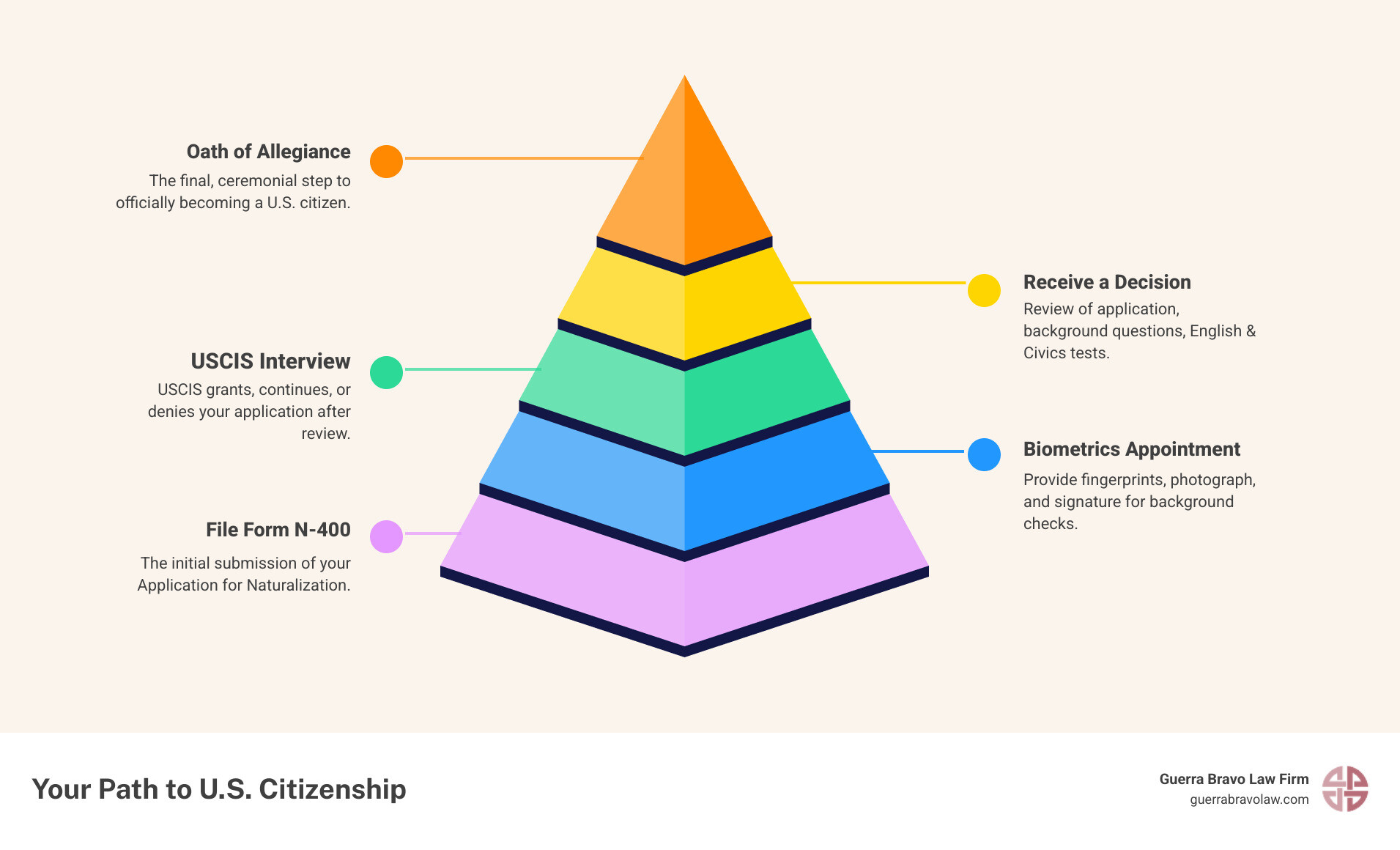
The path to citizenship is a structured series of steps requiring careful attention.

-
Step 1: File Form N-400: The process begins by submitting the N-400, Application for Naturalization, either online or by mail. We ensure this comprehensive form is prepared accurately.
-
Step 2: Biometrics Appointment: USCIS will schedule you to provide fingerprints, a photograph, and a signature for background checks.
-
Step 3: The USCIS Interview: A USCIS officer will review your application with you and administer the English and civics tests. We help you prepare for the interview and know what to bring for your naturalization interview.
-
English Test: Assesses your ability to read, write, and speak basic English.
-
Civics Test: Tests your knowledge of U.S. history and government. You must answer a required number of questions correctly. Be aware that the test format is changing for applications filed on or after October 20, 2025.
-
Exemptions: Some applicants may be exempt from the English or civics tests based on age, time as an LPR, or a documented medical disability (Form N-648).
-
-
Step 4: Receive a Decision: After the interview, USCIS will grant, continue, or deny your application.
-
Step 5: Oath of Allegiance: If approved, you will attend a ceremony to take the Oath of Allegiance and receive your Certificate of Naturalization, officially becoming a U.S. citizen.
-
Processing Times: The process typically takes 8 to 14 months, but this varies by USCIS field office. You can check current estimates using the USCIS Processing Times tool.
Why You Need to Find Naturalization Lawyers Near Me
While you can file for naturalization alone, a single mistake can cause major delays or denial. An experienced attorney ensures your application is strong and correctly filed, which is why so many people seek professional help for this critical process.
What to Look for When Searching for Naturalization Lawyers Near Me
When searching for naturalization lawyers near me in the Rio Grande Valley, from McAllen to Brownsville, choose a legal partner who understands your needs. Here’s what sets a great firm apart:
-
Specialization: Look for attorneys who focus on US Immigration Law, as it is a vast and complex field.
-
Experience: Our firm leverages over a decade of insider experience with federal immigration agencies. Look for lawyers with a proven track record in handling naturalization cases, including complex ones.
-
Reputation: Check client reviews and testimonials for feedback on communication, empathy, and successful outcomes.
-
Clear Communication: A good lawyer explains every step, cost, and potential outcome in understandable terms.
-
Personalized Strategy: Your journey is unique. Find an attorney for citizenship near me who develops a strategy custom to your specific circumstances.
The Role of Naturalization Lawyers Near Me in Complex Cases
An attorney is crucial when challenges arise that could jeopardize your application. Our expertise is vital in these situations:
-
Criminal History: Even minor arrests can affect your “good moral character” assessment. We analyze your record, advise on the potential impact, and build the strongest possible case.
-
Extended Absences: Trips outside the U.S. for over six months can break the continuous residence requirement. We help you gather evidence to prove you maintained your U.S. residency.
-
Prior Denials: If you’ve been denied before, we can address the reasons, prepare a stronger application, or file an appeal (Form N-336).
-
Marriage-Based Applications: Applying based on a three-year marriage to a U.S. citizen can be complex, especially with divorce or separation. We help you steer these nuances.
-
Military Service: We assist service members and veterans in using special, expedited naturalization provisions under INA Sections 328 and 329. An experienced immigration lawyer is critical to ensure you receive all available benefits.
-
Language or Disability Issues: We can help you apply for a medical disability exception (Form N-648) if a condition prevents you from meeting the English or civics requirements.
-
Complex Immigration Records: Our firm’s insider experience with ICE and DHS allows us to anticipate issues in complex cases and craft individualized legal strategies.
Costs and Special Pathways to Naturalization
Understanding the financial commitment and alternative routes is a key part of planning your citizenship journey. We believe in transparency regarding all costs and options.
Associated Costs
Naturalization costs include government fees and may include legal representation.
-
USCIS Filing Fees: The government fee for Form N-400 is the primary cost. You can estimate your total fees using the USCIS fee calculator.
-
Biometrics Fee: This is typically included in the N-400 filing fee.
-
Attorney Fees: Legal fees vary by case complexity. Our firm offers free initial consultations and often uses flat-fee billing for transparency.
-
Fee Waivers or Reduced Fees: Applicants with low income or who receive certain public benefits may qualify for a full fee waiver or a reduced fee. We can help determine your eligibility and prepare the necessary paperwork.
Special Naturalization Pathways
Several pathways can expedite the process or offer unique considerations beyond the standard 5-year residency rule:
-
Spouses of U.S. Citizens: If you have been a Lawful Permanent Resident for at least 3 years and married to a U.S. citizen for that entire period, you may be eligible to apply early.
-
Military Service: Members of the U.S. armed forces (current or honorably discharged) may qualify for an expedited process under INA Sections 328 and 329, often with waived residency requirements and fees. We are proud to assist military families with these applications.
-
Citizenship Through Parents: You may already be a U.S. citizen if a parent was a citizen at your birth or naturalized while you were a minor LPR. A dual citizenship lawyer near me can help clarify your status and obtain proof of citizenship.
-
Children Born Abroad: U.S. citizens can often transmit citizenship to children born abroad. The rules are complex, and we can help you steer the requirements for proving your child’s citizenship.
Frequently Asked Questions about the Naturalization Process
Here are answers to some of the most common questions we receive from clients in the Rio Grande Valley and beyond.
How long does the naturalization process typically take?
The process generally takes 8 to 14 months, from filing Form N-400 to the oath ceremony. Timelines can vary based on the local USCIS field office’s caseload and your case specifics. Check the USCIS Processing Times tool for current estimates.
What happens if I fail the English or civics test?
If you fail a portion of the test, USCIS will give you a second opportunity, usually scheduled within 60 to 90 days. If you fail a second time, your application will be denied. Thorough preparation is key to success.
Can my naturalization application be denied? What are my options?
Yes, an application can be denied for several reasons, including failing to meet eligibility requirements, failing the tests twice, or issues with good moral character (e.g., criminal history, failure to pay taxes). If denied, you can file Form N-336 to request a hearing within 30 days. An attorney can help you evaluate the denial, determine if an appeal is viable, or advise on re-applying after addressing the issues.
What are the key differences between naturalization and other immigration statuses?
Naturalization is the final step to becoming a U.S. citizen, the highest immigration status. Lawful Permanent Residents (Green Card holders) can live and work permanently in the U.S. but cannot vote in federal elections and can be deported. Temporary, non-immigrant statuses (like work or student visas) do not lead directly to citizenship.
How does marriage to a US citizen affect the naturalization process?
Marriage to a U.S. citizen can shorten the required residency period from five years to three, provided you have been married to and living with your citizen spouse for that entire time.
How does military service impact naturalization eligibility?
Military service can provide significant advantages for naturalization. Active-duty service members and certain veterans can often naturalize under special provisions (INA Sections 328 and 329) that waive the general residency and physical presence requirements. They may also apply from overseas and are often exempt from filing fees.
What are the implications of naturalization for children born abroad?
When you naturalize, your children under 18 who are LPRs living with you may automatically acquire citizenship. Children born abroad to a U.S. citizen parent may acquire citizenship at birth, depending on specific rules. We can help you understand the requirements and obtain proof of their citizenship.
What documents are typically required for a naturalization application?
Key documents include your Green Card, state-issued ID, passports, tax returns for the last 3-5 years, marriage certificates or divorce decrees, and any criminal history records. All foreign language documents require a certified English translation. We provide a comprehensive checklist to help you gather everything needed.
Begin Your Citizenship Journey with Confidence
Becoming a U.S. citizen is a profound and rewarding experience. The process is complex, but you do not have to steer it alone. An expert naturalization attorney provides the guidance and strategy needed to overcome obstacles and confidently move toward your goal.
At Guerra Bravo Law, our team leverages attorney Iris Guerra Bravo’s 14+ years of insider experience with federal immigration agencies like ICE and DHS. This invaluable background allows us to anticipate potential issues, understand the nuances of the system, and build battle-tested, individualized legal strategies for our clients right here in the Rio Grande Valley, including McAllen, Brownsville, Edinburg, Harlingen, Mission, Pharr, Weslaco, and beyond. We are dedicated to turning your American dream into a reality.
If you are ready to take the final step, let us guide you. We offer comprehensive citizenship application assistance and expert representation. Explore our services for US Citizenship Claims and contact us for a consultation today. We are your trusted naturalization lawyers near me, ready to serve you.
[