

December 6, 2025
Demystifying the B-1 Visa: How an Attorney Can Smooth Your Path
Demystifying the B-1 Visa: How an Attorney Can Smooth Your Path
Why Finding the Right B-1 Visitor Visa Attorney Matters for Your Business Travel
A b-1 visitor visa attorney specializes in helping foreign nationals steer the complex application process for temporary business visits to the United States, ensuring compliance with immigration law and maximizing approval chances.
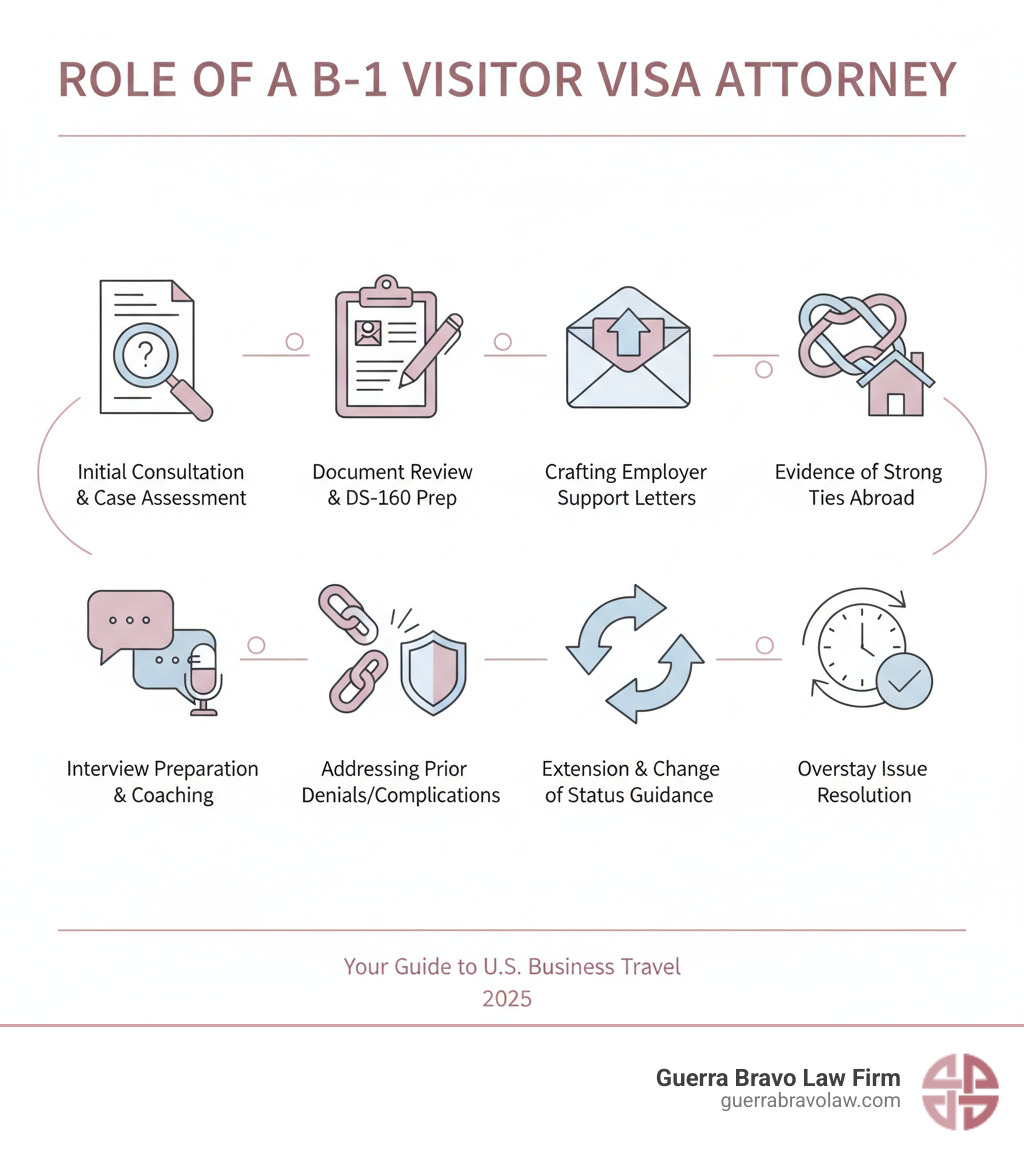
How a B-1 Visitor Visa Attorney Helps:
-
Application Strategy: Aligns your business activities with B-1 regulations.
-
Document Preparation: Crafts compelling employer letters and gathers evidence of ties abroad.
-
Overcoming Denials: Analyzes rejection reasons and builds stronger reapplication cases.
-
Interview Coaching: Prepares you for tough consular questions.
-
Status Issues: Guides extensions, changes of status, and resolves overstay complications.
Planning a business trip to the U.S. seems simple, but the B-1 business visitor visa is one of the most misunderstood and inconsistently applied visa categories. The rules are strict: you can attend meetings, but not work; you can negotiate contracts, but not be paid from a U.S. source. You must prove you will return home, yet the law presumes you intend to stay permanently.
This unpredictability means similar applications can get different outcomes based on the consular officer. An experienced immigration attorney understands the nuances that separate approval from denial. They know how to present your case persuasively and steer the complexities that make the B-1 visa so challenging for applicants to handle alone.
Understanding the B-1 Business Visitor Visa
The B-1 visa is a crucial tool for international business, allowing individuals to engage in commercial activities in the U.S. temporarily. It’s an essential gateway, but its specific rules can be confusing. Let’s clarify what the B-1 visa is and, just as importantly, what it is not.
What is a B-1 Visa?
The B-1 visa is a nonimmigrant visa for legitimate, short-term business activities. Crucially, it is not a work visa. You cannot use it to take a local job or get paid by a U.S. company.
The core principle is that your activities in the U.S. must primarily benefit your foreign employer. Your salary and the main profits from your work must remain outside the U.S. Misunderstanding this can lead to a quick denial or problems at the border.
Permitted Business Activities vs. Prohibited Employment
Knowing what is allowed under a B-1 visa is key to a successful trip. It all comes down to the definition of “business” in this visa category.
Permitted B-1 Activities: These activities generally benefit your overseas employer. You can:
-
Consult with business associates
-
Attending scientific, educational, professional, or business conventions and conferences
-
Negotiate contracts on behalf of your foreign employer
-
Settle an estate
-
Participate in short-term, uncompensated training
For a complete list of allowed activities, you can review official government resources. More on Specific Work Activities Eligible for B-1 Visa Category.
Prohibited Activities: Certain activities are strictly off-limits. The visa prevents you from:
-
Engaging in local employment for hire
-
Performing skilled or unskilled labor
-
Receiving a salary or other remuneration from a U.S. source
Your foreign employer must continue to pay you. Receiving payment from a U.S. entity (beyond expense reimbursement) is considered unauthorized employment. For more examples of what is not allowed, see More on Impermissible B-1 Visa Activities.
B-1 vs. B-2 Visa: A Clear Distinction
While often mentioned together, B-1 and B-2 visas serve very different purposes. Applying for the correct one is essential.
B-1 Visa (Business):
-
Purpose: For temporary business matters like attending meetings, negotiating contracts, or participating in professional conferences. The activities must primarily benefit a non-U.S. entity.
-
Example: A software developer from Germany visits a client in McAllen, Texas, for project consultations, while remaining on their German employer’s payroll.
B-2 Visa (Tourism/Pleasure):
-
Purpose: For pleasure, tourism, or medical treatment. This includes vacations, visiting friends or family, or attending social events.
-
Example: A family from Brazil vacations in the U.S., visiting relatives in the Rio Grande Valley and exploring national parks.
Combined B-1/B-2 Visa:
- Flexibility: U.S. consulates often issue a combined B-1/B-2 visa, allowing for trips that mix business with leisure. If you plan for both, be sure to state your intentions clearly in your application.
Understanding these distinctions is where a knowledgeable b-1 visitor visa attorney can provide invaluable clarity from the start.
The B-1 Visa Application and Eligibility Maze
Securing a B-1 visa requires careful preparation, strategic presentation, and a clear demonstration of your eligibility. One small misstep can lead to delays or denial, which is why a b-1 visitor visa attorney is so valuable.
Step-by-Step Application Process
The B-1 visa application follows a standard path, but each step demands attention to detail.
-
Step 1: Complete Form DS-160: This Online Nonimmigrant Visa Application is the foundation of your case. It must be filled out accurately, as any errors can trigger red flags. You can access the form on the U.S. Department of State website.
-
Step 2: Pay the Fee: A non-refundable application fee is required before you can schedule your interview.
-
Step 3: Schedule an Interview: Most applicants need an in-person interview at a U.S. embassy or consulate. Wait times can be long, so schedule it well in advance.
-
Step 4: Gather Documents & Attend Interview: Assemble your passport, photo, and supporting evidence of your business purpose and ties to your home country. The interview is your chance to prove you qualify for the visa.
Core Eligibility Requirements
A successful B-1 application rests on meeting these key criteria:
-
Temporary Intent: You must prove your stay is temporary and you intend to return home. U.S. law presumes you intend to immigrate, and you must overcome this with compelling evidence.
-
Strong Ties Abroad: This is how you demonstrate temporary intent. Evidence includes stable employment, family responsibilities, property ownership, and other commitments that compel your return.
-
Financial Sufficiency: You must show you have enough funds to cover all trip expenses without working in the U.S. This can be shown through bank statements or a letter from your employer.
-
Legitimate Business Purpose: Your application must clearly state why you are coming to the U.S. and what you will be doing. Supporting documents like invitation letters or conference registrations are crucial.
-
Admissibility: You must be admissible under U.S. immigration law, with no history of certain criminal convictions, immigration violations, or other disqualifying factors.
Special Considerations: VWP and Canadian Citizens
Some individuals have alternative entry options for business travel.
-
Visa Waiver Program (VWP): Citizens of eligible countries can travel to the U.S. for business for up to 90 days without a visa. They must get authorization through the Electronic System for Travel Authorization (ESTA) before their trip. VWP stays cannot be extended or changed.
-
Canadian Citizens: Canadians are generally visa-exempt and can apply for B-1 status at a U.S. port of entry. They must present their passport and evidence of their business purpose, and they still need to meet all B-1 eligibility requirements.
The Critical Role of a B-1 Visitor Visa Attorney
The B-1 category is subjective and inconsistently interpreted by immigration officials. What seems straightforward to you might raise red flags for a consular officer. This unpredictability is why a b-1 visitor visa attorney can be the difference between a successful business trip and a frustrating denial.
Navigating Complexities and Avoiding Pitfalls
The B-1 visa’s rules are deceptively simple. The category is often described as “nebulous,” with no clear tests for what is acceptable. This means two similar applications can get different outcomes. The biggest hurdle is the legal presumption that every applicant intends to immigrate permanently. It is your burden to prove otherwise.
An attorney helps build a compelling case to overcome this presumption, drawing on legal precedents like Matter of Hira. We strategically position your application, presenting your legitimate business activities in language that aligns with B-1 regulations and avoids misinterpretation. For more on how immigration law affects various visas, explore our insights on US Immigration Law.
How a B-1 Visitor Visa Attorney Strengthens Your Application
While you are an expert in your field, we are experts in immigration law.

-
Document Preparation: We help craft a persuasive employer support letter that clearly outlines your business purpose and confirms your payment from a foreign source.
-
Application Review: We carefully review your DS-160 form for accuracy and consistency, ensuring your application tells a coherent story.
-
Interview Coaching: We prepare you for tough consular interview questions, coaching you to provide clear, concise answers that reinforce your eligibility.
At Guerra Bravo Law Firm, our strategies are built on over 14 years of insider experience with ICE and DHS. This is battle-tested insight into what officers look for and how to present your case in the most favorable light.
The Value of Hiring a B-1 Visitor Visa Attorney for Complex Cases
When complications arise, our expertise is essential.
-
Prior Denials: A denial isn’t the end. We analyze the reasons, identify deficiencies, and develop a new strategy to address the concerns head-on.
-
Change of Status: Changing from B-1 to another status is delicate and requires careful legal guidance to avoid accusations of visa fraud. We can help steer this complex process.
-
Overstay Issues: Overstaying has severe consequences, including 3- and 10-year bars on re-entry. We provide legal options to mitigate the damage, but time is critical.
For insights into other employment-based immigration matters, visit our page on Immigration Lawyer for Work Visas.
Life in the U.S. on a B-1 Visa: Rules and Limitations
Once your B-1 visa is approved, you must strictly follow its rules to maintain your legal status and ensure smooth future visits. Ignoring these terms can lead to serious consequences.
Duration of Stay, I-94, and Extensions
Understanding how long you can legally stay is critical.
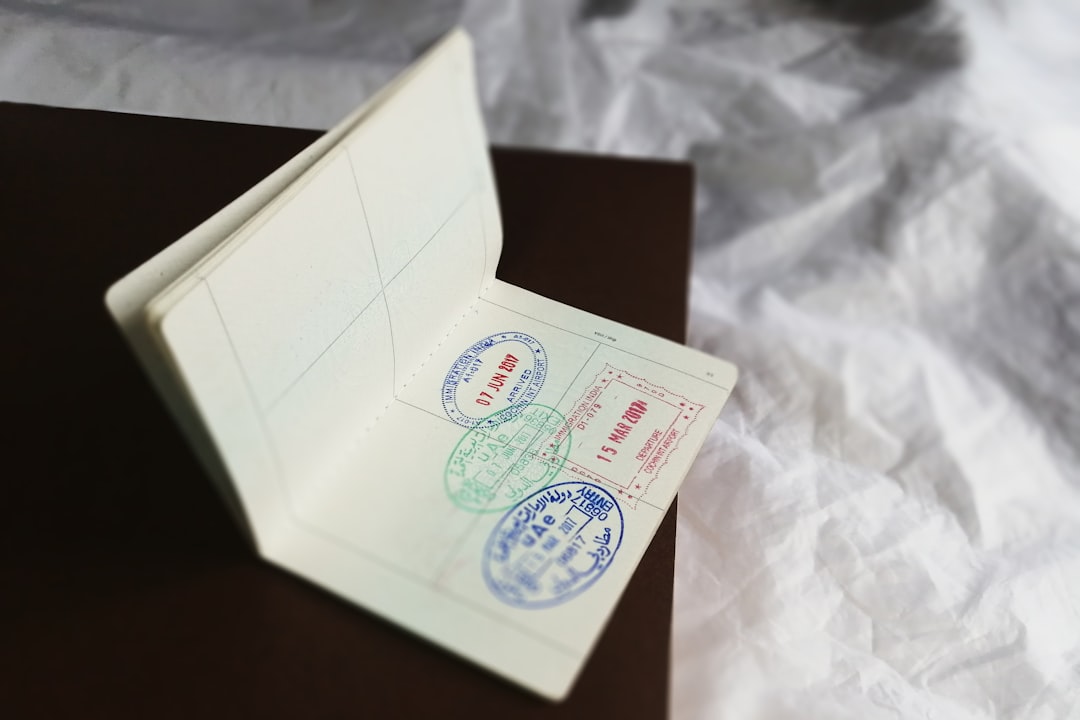
Your visa’s validity period (e.g., 10 years) is not your authorized length of stay. The actual duration is determined by a CBP officer at the port of entry, typically for up to six months. The most important document is your Form I-94, an electronic record of your arrival and authorized departure date. You must check your I-94 online after entering the U.S. and obey the date listed on it.
If your business requires more time, you can apply for an extension of stay by filing Form I-539 with USCIS before your I-94 expires. You must provide a valid reason, and approval is not guaranteed. Extensions are generally not permitted for those who enter under the Visa Waiver Program.
Key Restrictions: Employment, Family, and Changing Status
The B-1 visa has strict limitations you must understand.
-
No U.S. Employment: This is the most critical rule. You cannot engage in any employment or labor for a U.S. source. Your work must benefit your foreign employer, who must continue to pay your salary.
-
Family Members: Your B-1 visa does not cover your family. Your spouse and children must independently qualify for and obtain their own B-2 tourist visas to accompany you.
-
Changing Status: While possible in limited cases (e.g., to a student or work visa), changing your status is a complex and highly scrutinized process. It requires expert legal guidance from a b-1 visitor visa attorney to avoid accusations of visa fraud. For more details on immigration processes, see our Visa Procedures page.
The Consequences of Overstaying Your Visa
Overstaying your authorized period, even by one day, triggers severe and long-lasting consequences.
-
Automatic Visa Cancellation: The day you overstay, your B-1 visa becomes void, even if the stamp shows years of validity.
-
Future Inadmissibility: Overstaying by more than 180 days can trigger a 3-year bar on re-entering the U.S. An overstay of one year or more can result in a 10-year bar.
-
Permanent Red Flag: An overstay marks your immigration record permanently, making any future visa applications extremely difficult. An experienced b-1 visitor visa attorney can be invaluable in helping you understand these rules and stay compliant.
Frequently Asked Questions about the B-1 Visa
Getting clear answers to common questions can prevent serious issues down the road.
Can I look for a job in the U.S. on a B-1 visa?
No. You absolutely cannot actively seek or accept employment in the United States on a B-1 visa. This includes attending job interviews with U.S. companies or distributing your resume. Such activities violate your B-1 status and can lead to severe immigration consequences, including visa cancellation and bars on future travel. Your activities must benefit your foreign employer, who must continue to pay you.
What’s the difference between the visa in my passport and my I-94?
This is a critical distinction.
-
The visa in your passport is a travel document issued by a U.S. consulate that allows you to request entry at a U.S. port of entry. It may be valid for many years.
-
Your Form I-94 is the official electronic record issued upon arrival that dictates how long you are authorized to stay in the U.S. on a specific visit.
The date on your I-94 is the one you must obey. Overstaying this date, even if your visa stamp is still valid, is an immigration violation.
My B-1 visa was denied. What can I do?
A denial is disappointing but not always final. The first step is to understand why it was denied, which is often due to failing to overcome the presumption of immigrant intent (Section 214(b)).
An experienced b-1 visitor visa attorney can analyze the denial, identify weaknesses in your previous application, and help you prepare a stronger case for re-application. This may involve gathering more evidence of ties to your home country, refining your employer letter, or preparing you to better address the consular officer’s concerns. A denial means you need a more robust strategy for your next attempt. For help with complex visa matters, explore our immigration Services.
Secure Your Business Trip with Expert Legal Guidance
The B-1 visa is an essential tool for business in the United States, but its subjective nature and strict rules require a careful, informed approach. Every detail matters, from proving your intent to return home to framing your business activities correctly. An experienced b-1 visitor visa attorney can make all the difference, helping you build a robust application, prepare for the critical interview, and avoid common pitfalls that lead to delays or denials.
You are an expert in your business; we are experts in immigration law. At Guerra Bravo Law Firm, our strategies are built on over 14 years of insider experience with ICE and DHS. We provide battle-tested legal support for even the most complex immigration matters. We understand the challenges faced by individuals and businesses in McAllen, Brownsville, and throughout the Rio Grande Valley.
Your U.S. business objectives are important. Don’t leave your trip to chance. Let us help you start on solid legal ground. To see how we can support your immigration needs, visit our full range of immigration Services.
[